



Foreign Direct Investment in Lithuania: opportunities, strategies, and regulations
Lithuania has rapidly emerged as a strategic destination for foreign direct investment (FDI) in the Baltic region. With its EU membership, stable economy, and competitive business environment, Lithuania presents a valuable opportunity for international investors looking to tap into an emerging market. This article explores the potential of FDI in Lithuania, highlighting the benefits, entry strategies, recent investment trends, and important regulatory considerations.
Introduction to foreign direct investment in Lithuania
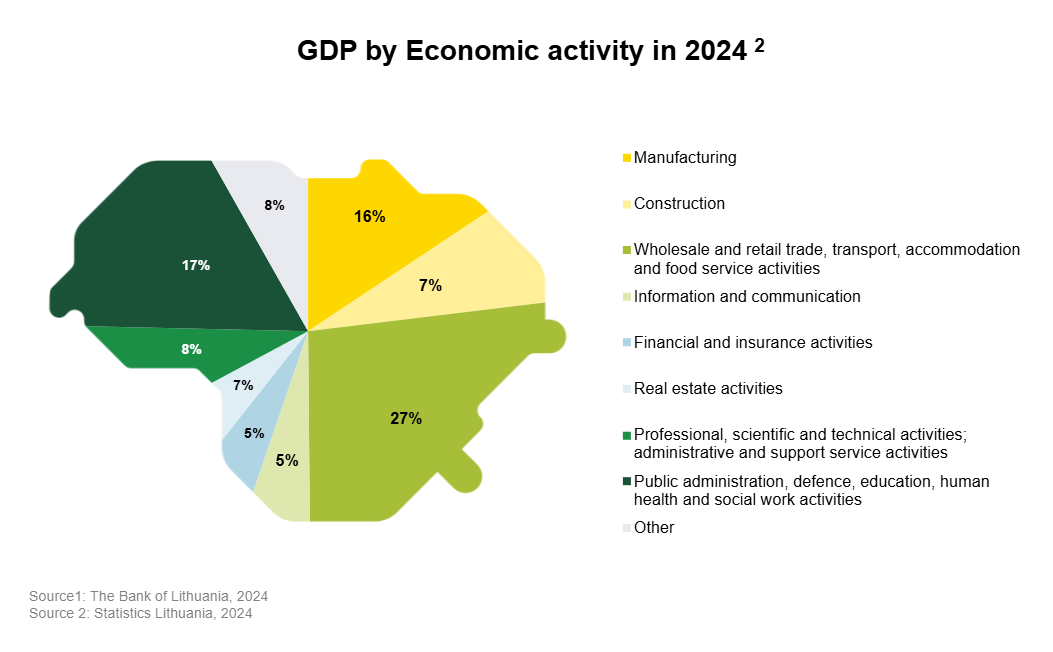
Foreign direct investment (FDI) plays a significant role in Lithuania’s economic development, driving growth and creating jobs. Lithuania’s economy, marked by its robust GDP growth – projected at a steady 3.0% in 2026 according to European Commission forecasts, and strategic location within the European Union, has benefited from international investment across a range of sectors, from technology to manufacturing. This investment has contributed to Lithuania’s position as an emerging hub for business in the Baltics, offering both investors and local businesses opportunities for expansion and collaboration.
Why Lithuania is an attractive destination for foreign direct investment
Lithuania’s appeal as an FDI destination stems from several factors:
1. Key industries and opportunities
Sectors like technology, manufacturing and renewable energy have attracted over 800 FDI projects between 2010 and 2025 . Lithuania is home to a growing tech ecosystem, making it ideal for investors in digital industries and information technology.
2. Skilled workforce and infrastructure
With more than 57% of population holding higher education degree, Lithuania’s labor force is highly educated, multilingual, and well-trained, particularly in the fields of engineering, IT and life sciences. The country also boasts a robust road, rail and sea infrastructure network linking Lithuania to 450 billion-wide markets in Western and Northern Europe.
3. Investment regulations and incentives
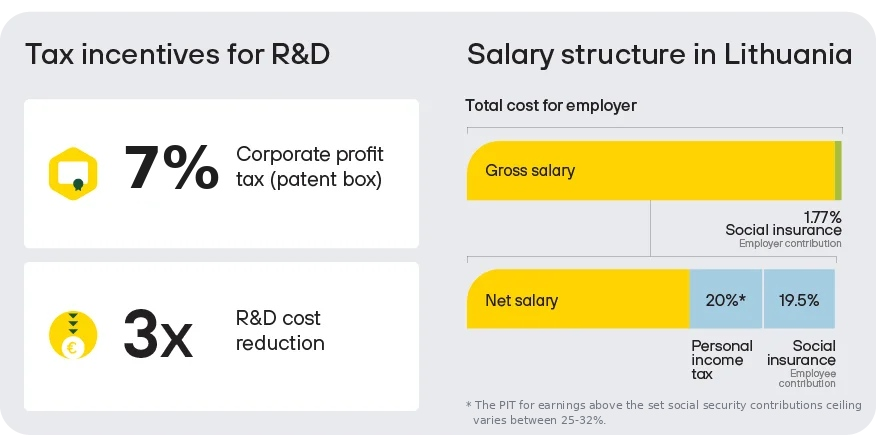
Lithuania offers a favorable investment regulatory environment for foreign investors. The government has streamlined processes for business establishment, and there are tax incentives for investments in research, development, and innovation. These incentives, combined with a strong regulatory framework, make Lithuania one of the more attractive options for FDI within Europe
4. EU and global market access
Lithuania’s EU membership provides easy access to the single market and eliminates many trade barriers. This makes Lithuania a strategic location for multinational corporations aiming to establish a foothold in Europe while also having the potential to connect to markets in Eastern Europe and Asia.
Global companies operating in Lithuania
International businesses choose Lithuania to set up core R&D operations, advanced automated manufacturing facilities, and highly digitalised Global Business Services (GBS) hubs serving international markets. Today, Lithuania is home to more than 380 global companies, from Fortune 500 corporations to fast-scaling technology firms.
Top international companies operating in Lithuania include:
- Nasdaq: Operating a critical global technology and business services center in Vilnius, running essential market operations.
- Thermo Fisher Scientific: Running one of the company’s largest and most advanced molecular biology excellence centers in Europe, based in Vilnius.
- Revolut: established Revolut Bank UAB in Lithuania, licensed by the European Central Bank and regulated by the Bank of Lithuania, supporting its European banking operations from Vilnius.
- Hollister: A global medical devices manufacturing plant scaling operations in the Kaunas Free Economic Zone (FEZ).
- Unity: has expanded its Lithuanian operations across functions including engineering, customer QA, release QA, site reliability, HR operations, and Asset Store operations.

See why global companies choose Lithuania
Explore success stories from 380+ international companies that chose Lithuania for growth, innovation, and expansion.
Market entry strategies for foreign investors
Market entry strategies vary, depending on the investor’s goals and resources. Common strategies for foreign businesses entering Lithuania include:
1. Greenfield investments
Investors may establish entirely new facilities, which allow them to maintain full control over operations and decision-making. This strategy is common in sectors such as manufacturing and logistics.
2. Joint ventures
Many investors partner with local companies to combine resources and share market knowledge. Joint ventures are often favored by companies looking to mitigate risks while gaining faster market access.
3. Mergers & acquisitions (M&A)
M&A allows foreign investors to enter the Lithuanian market by acquiring or merging with an established local company, reducing initial setup costs and leveraging the acquired company’s market position and network.
4. Regulatory considerations
Foreign investors should understand Lithuania’s investment regulations and compliance requirements. The country’s regulatory environment is business-friendly but has specific legal frameworks governing areas like employment, environmental compliance, and taxation. Engaging with local legal experts can help navigate these regulations more efficiently.
Capital flows and investment trends in Lithuania
FDI into Lithuania has grown steadily, with strong capital flows directed toward sectors like technology, manufacturing, and business services. Net FDI inflows have consistently averaged an impressive 4% of GDP over recent years according to World Bank indicators. The Lithuanian government’s commitment to attracting FDI has encouraged multinational corporations to invest in high-tech industries and sustainable development projects.
Recent trends indicate a rise in tech-related investments as companies are drawn to Lithuania’s skilled IT workforce and innovation hubs. Notable FDI projects include investments by global giants like Nasdaq and Thermo Fisher Scientific, which have established significant operations in Lithuania. These companies demonstrate the country’s potential to attract high-value investments that contribute to economic development.
Why invest in Lithuania?
Foreign direct investment in Lithuania is increasingly attractive for international investors, offering a stable and accessible gateway into European markets. From its skilled workforce to a favorable regulatory environment and EU membership, Lithuania has positioned itself as a viable destination for cross-border investment. While challenges exist, careful planning and an understanding of local regulations can help mitigate risks, allowing investors to capitalize on the country’s growth potential.
Lithuania remains a promising investment choice for those seeking to establish a European presence with opportunities for growth and expansion across various industries.

Want to learn more?
Invest Lithuania is proud to highlight the success stories of companies that have made Lithuania their home and leveraged unique business opportunities. If you’re interested in learning how businesses are achieving growth, expanding operations, and exploring new opportunities, feel free to contact us.

Enjoy reading our news?
Want to learn more about the latest updates?
Invest Lithuania is here to keep you informed about the latest news, opportunities, and developments shaping Lithuania’s business landscape. If you have any questions or would like more details, feel free to contact us—we’re here to provide the insights you need.
- Share now:
-

-

-

-
