



Opinion | Drone and counter-drone technologies in Lithuania: a growing defence tech hub
This article was written by Šarūnas Genys, Manufacturing Team Lead at Invest Lithuania
Ukrainian efforts in countering Russian aggression have demonstrated that drones and unmanned systems are already indispensable for every military operation. Lithuania is focusing on the technologies that determine how unmanned platforms perform: AI-enabled autonomous systems, sensors, photonics, electronic warfare, secure communications and scalable production. This builds on the country’s existing strengths in the fields of defence, cybersecurity and advanced manufacturing.
Key takeaways
- European military expenditure rose by 14% in real terms to $864 billion in 2025. Among European NATO members, military spending grew faster than at any time since 1953.
- Under NATO’s Drone Edge initiative, NATO members announced more than $40 billion for counter-drone capabilities over five years and aim to train five times as many drone operators by the end of 2027.
- Lithuania’s 2026 defence budget reached a record €4.79 billion, or 5.38% of GDP, with €145 million earmarked for integrated air defence against drones.
- Lithuania’s core strength lies in high-value subsystems and integration: autonomous UAS, counter-UAS, electro-optics, AI defence software, and secure communications.
Drone technologies are transforming modern defence
Drone technologies are hardware and software systems used to operate unmanned aerial vehicles for civilian and military applications. In recent years, they have moved from a supporting role to the centre of military planning. FPV strike drones, ISR (intelligence, surveillance, reconnaissance) platforms, loitering munitions, and electronic warfare systems are now used regularly.
In addition to the aircraft itself, an unmanned aircraft system (UAS) also includes a control station, communications link, payload, and supporting software.
Deep strike drone capabilities are now top of mind for European countries, as they observe Ukrainian’s capability to launch attacks far beyond the frontline. The EU’s Defence Readiness Roadmap 2030 identifies drones and counter-drone systems as a key capability, while NATO’s Drone Edge initiative is accelerating investment, procurement and operator training.
The Ukrainian military has shown how rapidly military technology can move from experimental novelty to routine capability. UAS capabilities now range from front-line ISR and FPV strikes to long-range one-way attacks, creating asymmetric effects at tactical and strategic depth. Recent military assessments indicate that drones account for a growing share of battlefield casualties, although estimates vary. Furthermore, defence reports note that Ukrainian and Russian drone technology is becoming outdated every six weeks on average. The implications of this phenomenon for the defence industry are stark, requiring companies to update their products on a continuous basis.
Institutional investment is following operational demand. In July 2026, NATO Allies announced more than $40 billion for counter-drone capabilities over five years, a counter-drone marketplace, and expanded operator training. Drone tech is, therefore, becoming a strategic defence infrastructure rather than a niche tactical market.
What are counter-drone technologies?
Counter-drone technologies detect, identify, track and neutralise unauthorised or hostile drones.
A counter-UAS is a layered system rather than a single jammer or interceptor. The sequence these systems follow runs from detection, identification, and tracking through to jamming, deception, interception and post-engagement learning. Radar, radio-frequency, and acoustic and electro-optical sensors feed AI-enabled command-and-control, while secure communications keep the system connected under jamming and time pressure.
The central challenge is cost: large numbers of cheap drones require scalable defences that do not rely on expensive interceptors for every target. NATO’s Layered Counter-UAS Initiative is testing low-cost sensors, effectors, and decision tools as a unified interoperable architecture.
The European Commission’s Action Plan on Drone and Counter-Drone Security, published in February 2026, focuses on preparedness, detection, coordinated response, and defence readiness. It supports a Drone Alliance with Ukraine and builds on the Commission’s Drone Strategy 2.0. The European Defence Agency is also expanding interoperability and training, including its first European military drone-pilot course in June 2026.
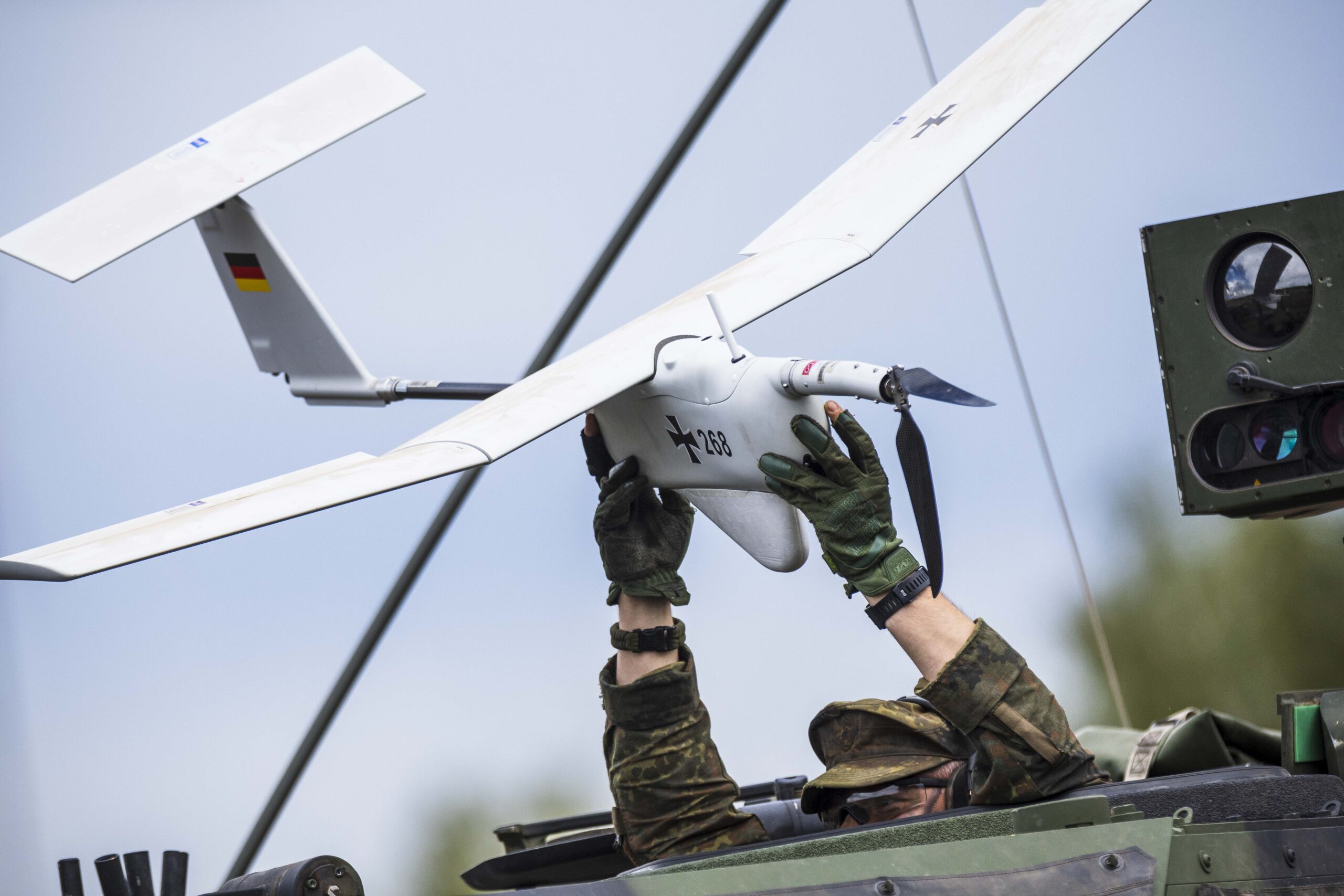
© sgt. K. Kavolėlis / Ministry of National Defence of Lithuania
Lithuania’s drone technology ecosystem is growing
Within this context, Lithuania is concentrating its drone technology ecosystem on high-value subsystems, integration, and rapid adoption.
In June 2025, the government applied an exemption under Article 346 of the Treaty on the Functioning of the European Union to specified defence procurements. The decision covered UAVs, counter-drone systems, optical surveillance equipment and laser target designators. Announced planned purchases included up to €12 million from NT Service, €9 million from Brolis Defence Group, up to €1.5 million from Aktyvus Photonics, and up to €19 million for FPV and reconnaissance drones.
These publicly announced projects illustrate how Lithuanian defence companies are participating across several layers of the drone and counter-drone value chain.
Vilnius-based Granta Autonomy develops UAS, gimbals, and digital data links. It secured a €1 million Ministry of National Defence FPV-drone order and signed a letter of intent with Rheinmetall Electronics on UAV integration for military vehicles. RSI Europe’s Shpak FPV system was selected for Lithuanian Armed Forces exercises, while a €4 million ILTE loan is supporting production growth. In June 2026, RSI Europe and Ukraine’s The Fourth Law agreed to develop joint drone manufacturing in Lithuania.
The planned Vytis development, testing, and certification centre in Kaunas, backed by approximately €20 million, is part of the broaderVytis initiative, a €300 million investment package by Lithuania’s Ministry of the Economy and Innovation.
Why AI, sensors and photonics matter
Photonics and sensors underpin nearly every stage of a drone’s detect-and-decide cycle, from night-time thermal imaging to laser-assisted targeting.
Visible-light and thermal cameras, radar, radio-frequency receivers, and inertial sensors help with core functions such as identifying targets, navigating when satellite signals are unreliable, and operating at night.
Computer vision and edge AI process data on board, reducing dependence on a continuous link. In practical AI defence systems, automation can support detection, tracking, navigation, and mission planning, while human oversight remains important for targeting and escalation decisions.
Lithuanian companies are playing an important role. Brolis Defence Group has developed electro-optical and laser systems for surveillance, reconnaissance and targeting, including night-vision, thermal, and short-wave infrared technologies. It serves armed forces across dozens of countries, and Lithuania has contracted more than €17 million of its laser sight and night-vision equipment.
Aktyvus Photonics produces compact laser target-designation modules for micro-UAVs and other lightweight platforms.
Granta Autonomy’s X-WING loitering munition is another example of AI-driven innovation by Lithuanian defence companies, although full battlefield autonomy remains contested and most systems retain human oversight.
Secure communications systems are needed to protect command traffic and sensor data from interception or disruption. This requirement connects drone innovation to Lithuania’s broader cybersecurity ecosystem. The wider connection between defence innovation, AI, and national resilience is explored in Lithuania’s security mindset and AI resilience. The strategic value lies in the combined stack: airframes, trusted sensors, software, secure communications, and components that can be manufactured at scale.
Dual-use innovation is accelerating drone development
Dual-use technologies have both civilian and defence applications.
Astrolight’s POLARIS terminal is being developed with the Lithuanian Navy for tactical, jam-resistant laser communications, while its satellite laser technology also serves commercial connectivity. Astrolight advanced to the second phase of the NATO DIANA defence accelerator, gaining further funding, testing opportunities, and investor access.
Kongsberg NanoAvionics adds satellite manufacturing scale, while Blackswan Space develops autonomy software for complex space and defence missions.
Defence funding refers to public or institutional finance used to develop military capabilities, technologies and industrial capacity. NATO DIANA provides acceleration support and access to more than 200 test centres, while the NATO Innovation Fund is investing more than €1 billion in dual-use deep technology. The European Defence Fund has a budget of nearly €7.3 billion for 2021–2027, including €1 billion for collaborative defence R&D in its 2026 work programme.
By 2024, six Lithuanian test centres had been approved for the DIANA network in fields including AI, data science, space, and cybersecurity. This infrastructure is helping deep-tech teams adapt products to defence requirements and reach military end users. Kaunas University of Technology (KTU) and the FCentre for Physical Sciences and Technology (FTMC) are contributing expertise in defence technologies, photonics, sensors, and drone communications.
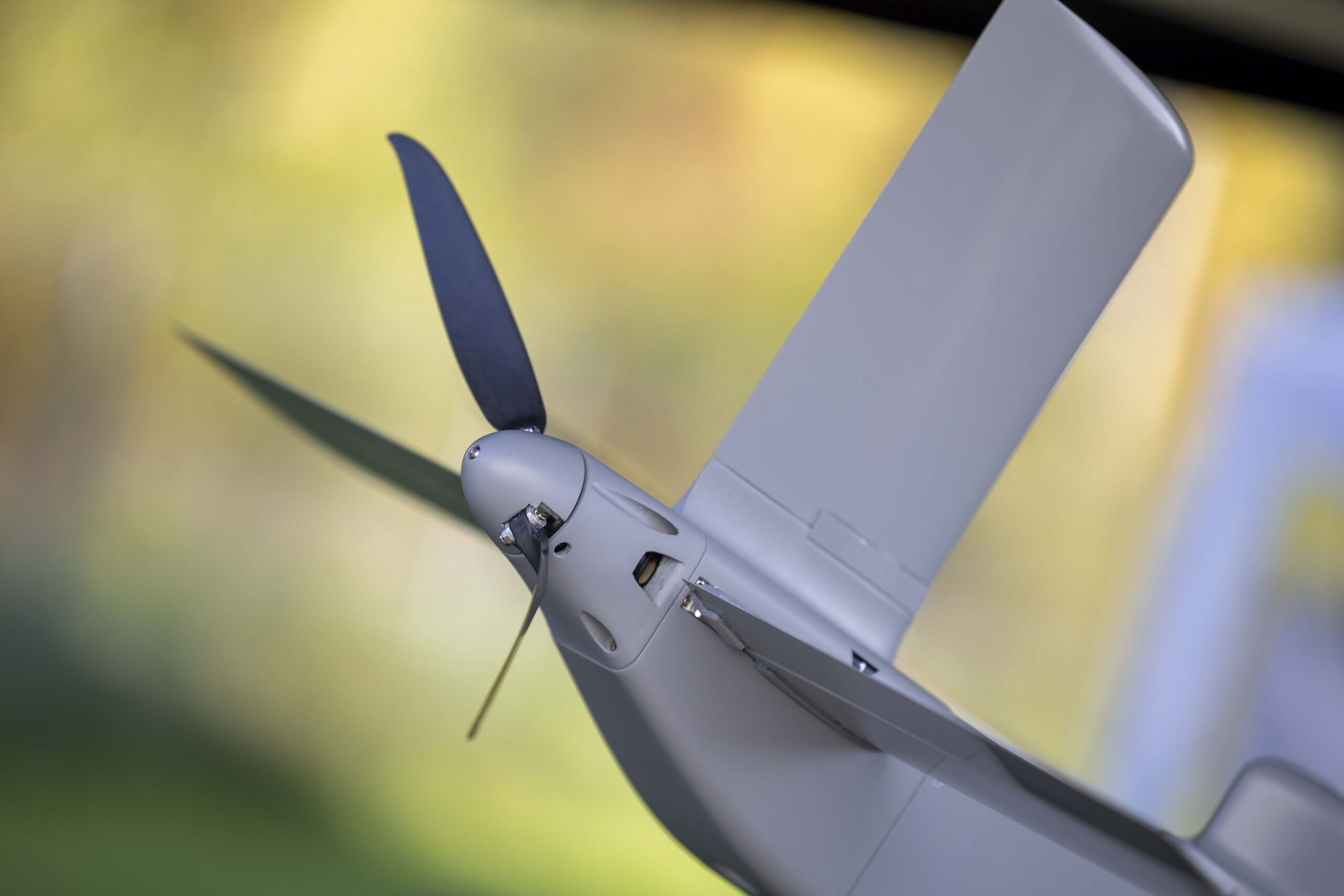
© sgt. K. Kavolėlis / Ministry of National Defence of Lithuania
Why investors are watching drone technologies
Investor interest in drone technologies is being driven by geopolitics, scaled procurement, EU and NATO funding, export potential, and the convergence of AI, sensors, autonomy, and secure communications.
Government procurement is expanding through programmes such as the European Commission’s Readiness 2030 package, which could mobilise up to €800 billion in additional defence investment.
Export demand is rising too. Lithuania is participating in the Latvia–UK-led Drone Coalition, which coordinates support and procurement for Ukraine and links participating industries to multinational supply chains. At home, the Lithuanian Government approved the €40 million MILInvest-2 venture-capital instrument in April 2026, focused on early-stage defence and security companies.
The strongest investment cases combine a defined end user, exportable intellectual property, and a credible manufacturing plan across AI, autonomy, sensors, photonics, and secure communications. The shift from prototypes to production is examined in a recent article by Lithuania’s official investment agency, Invest Lithuania.
Why Lithuania is becoming a European drone innovation hub
Lithuania combines NATO and EU market access with capabilities in AI, electronics, photonics, cybersecurity, and advanced manufacturing.
Its most credible opportunity is not to dominate every layer of the value chain. Instead, it is to become a specialised European base for sensors, optics, autonomous systems, counter-UAS, secure communications, software, and integration, supported by procurement and testing infrastructure.
Moving forward, the country’s priorities are predictable procurement, certification capacity, specialist talent, secure supply chains, and growth capital. Lithuania’s advantage will depend on turning policy momentum into repeatable production and export-ready systems.
Across the Baltics, governments are using complementary models. Latvia has launched counter-drone R&D projects with expected investment of up to €10 million. Estonia is developing state-backed defence industry parks. And Lithuania is combining domestic procurement with the Vytis funding package and the planned testing and certification centre in Kaunas. Together, these models show how the state can act as customer, investor, and infrastructure provider.
For manufacturers planning larger projects, Lithuania’s advanced-manufacturing base and Investment Highway provide a route from investment decision to industrial deployment. Together, these factors give Lithuania a realistic position in the European drone technologies value chain.

Enjoy reading our news?

Want to learn more about the latest updates?
Invest Lithuania is here to keep you informed about the latest news, opportunities, and developments shaping Lithuania’s business landscape. If you have any questions or would like more details, feel free to contact us—we’re here to provide the insights you need.
- Share now:
-

-

-

-
