


Core frameworks such as MiCA and DORA are EU-wide. Lithuania is therefore not offering its own version of those rules. The local part is how companies work with national supervision, connect to payments infrastructure and access the expertise needed to implement the common EU framework.

Opinion | Fintech regulation in Lithuania: what companies need to know when choosing an EU base
November 03, 2026
Written by Deimantė Žemgulytė, Finance and Fintech Team Lead at Invest Lithuania
For fintech companies choosing where to set up or expand in the EU, fintech regulation in Lithuania is worth looking at beyond the licensing timeline. MiCA and DORA now set much of the rulebook at European level. The difference between locations is increasingly in how those rules work in practice: access to supervisors, payments infrastructure, and the people needed to run a regulated business day to day.
Key takeaways
- Lithuania has 248 active fintech companies, around 7,800 fintech professionals and about 40 million EU customers served by fintechs licensed in the country.
- For companies comparing EU bases, the practical advantages sit alongside the licence itself: access to the Bank of Lithuania, SEPA connectivity through CENTROlink, and an established pool of regulatory and technology expertise.
- MiCA and DORA apply across the EU. They make local execution more important, not less, because companies still need governance, cybersecurity, risk and compliance capabilities on the ground.
- The useful comparison is therefore not simply which jurisdiction can authorise a company fastest, but where it can operate effectively once authorised.
Why fintech regulation in Lithuania matters after licensing
The size of the market gives some context. According to Lithuania’s Fintech Overview 2025-2026, Lithuania has 248 active fintech companies employing around 7,800 professionals, while fintechs licensed in the country serve about 40 million customers across the EU. Electronic money and payment institutions processed EUR 166 billion in payments by the end of 2025, 60% more than in 2022.
For an expansion team, however, those headline figures are only part of the decision. A licence opens the door; it does not run the business. Firms still have to deal with supervision, keep compliance and governance frameworks working, manage operational risk, connect to payment rails and continue developing products.
Lithuania has built several practical tools around those needs. The Bank of Lithuania’s Newcomer Programme, Regulatory Sandbox and CENTROlink serve different stages of the journey. The Newcomer Programme gives prospective market participants a route for early regulatory questions. The Sandbox allows financial innovations to be tested in a supervised setting. CENTROlink gives eligible payment and electronic money institutions technical access to SEPA.
This is where the location question becomes more concrete. Time to licence still matters, especially for a company entering a new market. But so does what happens the morning after authorisation: who the company can speak to, how it connects to the payments system and whether it can find the expertise to meet ongoing requirements.

What MiCA changes for crypto companies considering Lithuania
The Markets in Crypto-Assets Regulation (MiCA) created a common EU framework for crypto-asset issuers and service providers, covering authorisation, governance, consumer protection and market conduct. Under MiCA Article 143, grandfathered providers could continue under national transitional arrangements no later than 1 July 2026. Lithuania brought its own transition for existing virtual asset service providers to an end earlier, at the start of 2026.
That raises the bar for market entry. A simple registration model is no longer the point of comparison. Crypto businesses need to show governance, capital, expertise and real operational substance, and supervisors need the capacity to oversee them over time.
Robinhood offers a useful example. In 2025, Robinhood established its first European hub in Lithuania and Robinhood Europe received the first crypto-asset service provider licence issued by the Bank of Lithuania under MiCA, alongside a Category A financial brokerage licence. For a global platform, Lithuania was not just the place to obtain an authorisation; it became the base for its regulated European operations.
How DORA changes the operating environment for fintechs
The Digital Operational Resilience Act (DORA) is less visible to customers than a new product launch, but it has a direct effect on how financial companies organise themselves. DORA has applied since 17 January 2025 and covers ICT risk management, incident reporting, resilience testing and third-party technology risk.
Because DORA is an EU-wide framework, no member state can claim a different set of core rules as an advantage. The distinction is more practical: can a company hire the cybersecurity, risk, compliance and technology specialists needed to meet those rules without turning every requirement into a cross-border staffing problem?
That makes operational capability part of location selection. For a fintech assessing Lithuania, the question is not whether DORA applies – it does – but whether the local market can support the work that compliance with DORA actually creates.
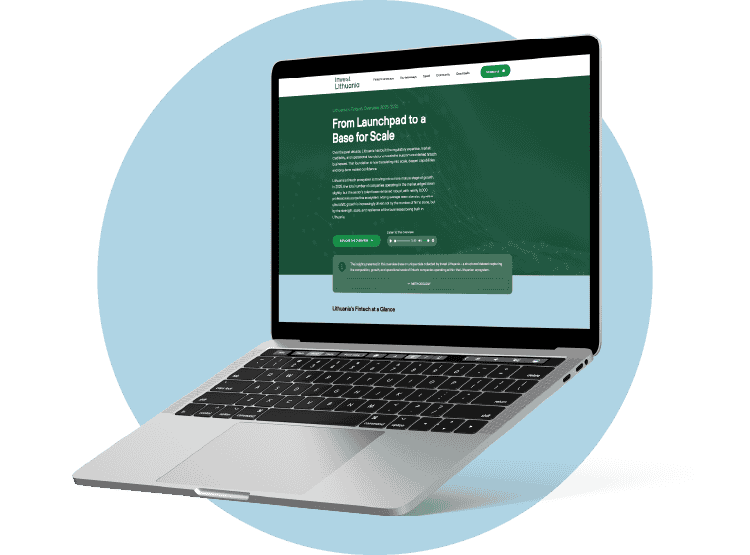
Lithuania’s Fintech by the numbers
Explore the data, trends, and insights shaping Lithuania’s fintech ecosystem in our Lithuania’s Fintech Overview 2025–2026
What should fintech companies compare when choosing an EU base?
There is no single metric that settles a location decision. In practice, four areas tend to tell companies more than the headline licensing timeline:
- Regulatory access and supervisory clarity. Can the company understand requirements early, resolve questions efficiently and maintain a workable relationship with the relevant authorities?
- Payments and market infrastructure. Is there practical access to SEPA and the systems needed to serve customers across Europe?
- Specialist talent. Can the business hire compliance, AML, risk, cybersecurity and technology professionals who already understand regulated financial services?
- Operational substance. Can the company build real decision-making, product, compliance and operational functions in the jurisdiction, rather than keeping only a licensing entity there?
Recent investment decisions show why that last point matters. In 2026, Aspora chose Vilnius as the base for its EU business and announced plans to build a team of up to 100 people. The licence matters, but so does the willingness to put people and long-term operations in the same market.
Fintech regulation in Lithuania: what matters when choosing an EU base
Fintech regulation in Lithuania should be judged less by the promise of a quick licence and more by the environment around the licence. MiCA and DORA have made the core rules more consistent across Europe, which puts greater weight on supervision, infrastructure and the people who have to implement those rules in practice.
For fintechs comparing European locations, that makes the decision quite practical: once authorised, can the business actually operate well from there? Lithuania’s case rests on the combination of regulatory access, payments infrastructure and specialist expertise. For more detail on that operating environment, see Fintech & Financial Services in Lithuania.
FAQ
-
How much of fintech regulation in Lithuania is local, and how much is EU-wide?
-
Does MiCA make location irrelevant for crypto companies?
No. MiCA harmonises the regulatory framework, but companies still operate in real national markets. Supervisory relationships, hiring, infrastructure and the ability to build operational substance still vary from one location to another.
-
What does the Bank of Lithuania offer new fintech market entrants?
The Newcomer Programme, Regulatory Sandbox and CENTROlink are three of the most relevant tools. They support early regulatory dialogue, supervised testing of financial innovation and, for eligible institutions, technical access to SEPA.

Enjoy reading our news?

Want to learn more about the latest updates?
Invest Lithuania is here to keep you informed about the latest news, opportunities, and developments shaping Lithuania’s business landscape. If you have any questions or would like more details, feel free to contact us—we’re here to provide the insights you need.
- Share now:
-

-

-

-
