


- Follow us!
-

-

-

-


In today’s competitive European landscape, investors are looking beyond cost efficiency. They seek regulatory clarity, resilient infrastructure, skilled talent, and sectoral depth. Lithuania has emerged as one of the EU’s most agile and structurally competitive economies, combining speed, stability, and specialisation. Indeed, Lithuania’s economy grew by 2.8% compared to 2024, exceeding forecasts, according to the National Audit Office of Lithuania.
Additionally, the European Commission’s 2025 Economic Forecast projects continued growth of 3.0% in 2026, driven by strong domestic demand and investment. The country is also recognised as one of the fastest-growing innovators in the EU, maintaining its 18th position in the 2025 European Innovation Scoreboard.
For companies considering investment in Lithuania, the country offers a compelling mix of policy innovation, energy security, and high-value ecosystems across AI, defence, life sciences, fintech, and advanced manufacturing.
Below are six strengths that make Lithuania an attractive destination for foreign direct investment (FDI).
Speed matters in strategic expansion. Lithuania’s Investment Highway framework enables large-scale investors to significantly shorten administrative timelines for land acquisition, construction permits, and infrastructure setup. Compared to many EU jurisdictions, procedures are coordinated and accelerated through central government oversight.
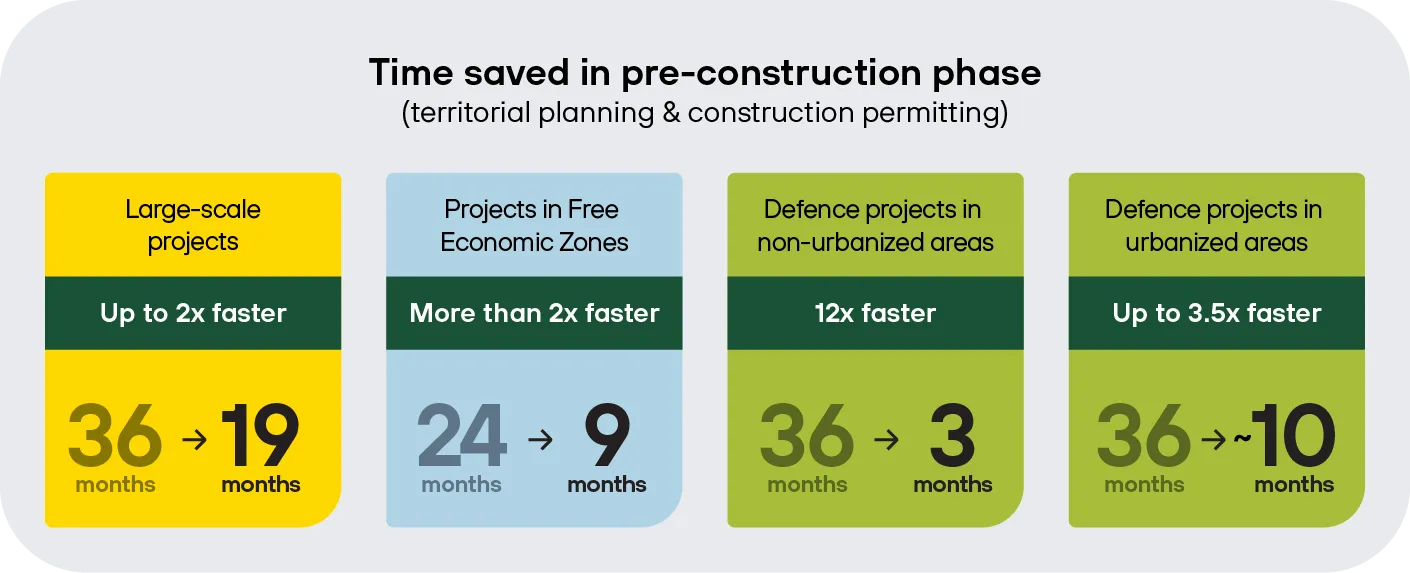
For investors exploring starting a business in Lithuania as a foreigner, the process is transparent and structured. Investors benefit from clear guidance on how to establish legally, regulatory requirements, and available incentives & funding. The national investment promotion agency, invest Lithuania, provides end-to-end support: from site selection to sector-specific advisory. Moreover, Work in Lithuania provides hiring services in Lithuania for big companies and relocation information for highly qualified international specialists and talents.
This execution speed, combined with EU market access, positions Lithuania as a pragmatic gateway to Europe.
Lithuania is positioning itself as an AI engineering hub, combining strong STEM education with early regulatory preparedness under the EU AI Act. The country has introduced sandbox-style frameworks that enable controlled testing of AI systems, reducing compliance uncertainty.
The Lithuanian AI ecosystem includes fast-growing AI startups, globally scaling AI companies such as 2026 unicorn Cast AI, and applied research centres working closely with industry. A high concentration of skilled machine learning engineers in Lithuania supports rapid product development across fintech, cybersecurity, health tech, and defence applications.
For investors evaluating opportunities of AI investment in Europe, Lithuania offers competitive cost structures and expanding AI infrastructure in Europe connectivity. Companies exploring how to invest in AI technology in the EU increasingly consider Lithuania due to regulatory clarity and technical depth.
In short, Lithuania’s AI ecosystem is built around deployment and engineering capacity, not just ambition.
Lithuania has fundamentally restructured its energy system over the past decade, marked by its successful synchronisation with the Continental European Networks in early 2025, alongside supply diversification and accelerated renewable capacity growth.
Solar and wind installations expanded rapidly through 2024, significantly increasing the share of domestic generation and reducing external dependency. Under its national energy independence strategy and the 2021–2030 National Energy and Climate Action Plan, Lithuania has committed to raising the share of renewable energy in final energy consumption to 45 % by 2030. The long-term objective remains to achieve near-full decarbonisation of its electricity by 2030–2035.
For manufacturers, data-driven companies, and investors assessing operational risk, this translates into greater price predictability and supply resilience, a critical differentiator in the EU market.
Given its geopolitical context, Lithuania’s defence policy has become a national priority. At the end of 2025, the Lithuanian Parliament (Seimas) approved record-high defence spending allocating, 5.38% of GDP to national defence. As Minister of Finance Kristupas Vaitiekūnas stated, “By allocating 5.38 % of GDP to defence, Lithuania demonstrates unwavering commitment to safeguarding its sovereignty and contributing to collective security within the NATO framework.” The measure consolidates Lithuania’s standing as a reliable NATO partner, reinforcing deterrence while ensuring long-term policy continuity.
The expanding Lithuanian defence industry focuses on drones, secure communications, lasers, advanced electronics, and cybersecurity. Companies developing military technology in Lithuania benefit from close cooperation between government, NATO partners, and private sector innovators. This collaborative ecosystem has attracted global defence players such as Rheinmetall, while also enabling the growth of competitive domestic companies, as stated in this article by Invest Lithuania.
For international investors asking, “is Lithuania safe?” the answer lies in NATO membership, strong transatlantic integration, and active regional security cooperation. Lithuania’s defence sector offers both domestic opportunity and export potential across allied markets.
Fintech in Lithuania has become a European success story. The country hosts one of the largest fintech communities in the EU, supported by a proactive central bank and streamlined licensing procedures.
The Lithuanian ecosystem of fintech companies spans payments, digital banking, e-money institutions, compliance technology, and open banking solutions. Fintech and Vilnius are now impossible to dissociate, and the capital city is currently widely recognized as way more than a dynamic regulatory and operational hub; it established itself as one of Europe’s most dynamic fintech hubs, increasingly defined by quality, regulatory sophistication, and long-term market sustainability rather than scale alone.
For companies seeking to invest in fintech, Lithuania offers a combination of accessible regulators, skilled compliance professionals, and passporting access to the EU single market.
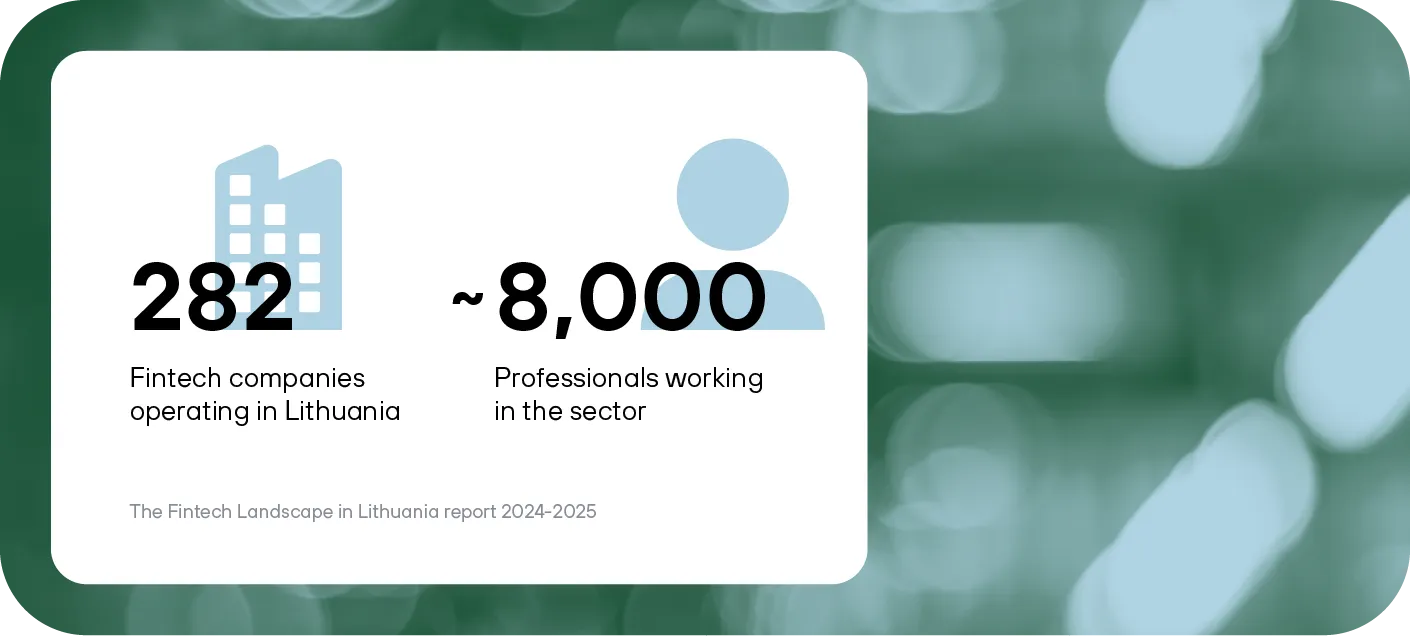
For a detailed overview, see the 2024-2025 full fintech ladscape report by Invest Lithuania.
Biotechnology in Lithuania is one of the country’s most globally competitive sectors. Lithuanian biotech companies export to more than 100 countries and operate across molecular biology, gene technologies, pharmaceuticals, and medical devices. Ranked among Europe’s fastest-growing life sciences ecosystems, the sector currently generates around 2.7% of Lithuania’s GDP and is growing at 22–25% annually, with a target of reaching 5% by 2030.
The broader biotech ecosystem is supported by strong university-industry collaboration, advanced research infrastructure, and significant private investment. A landmark example is the €7 billion Bio City Life Sciences Hub under development in Vilnius, anchored by the region’s first gene therapy centre and planned molecular biotechnology facilities, which together are expected to create over 2,000 jobs by 2030 and position the capital as a leading European biotech hub.
Investors in the sector benefit from highly specialised talent, advanced R&D capacity (including world-class research partnerships such as the European Molecular Biology Laboratory institute at Vilnius University) and growing production capabilities in biomanufacturing and precision medicine.
Lithuania also has niche strengths such as biofertilizers production and other industrial biotech segments, with innovative local manufacturers serving agricultural and global markets. The country is home to more than 300 life sciences companies, including over 120 dedicated biotech startups, and strong export performance, with most biotech products shipped to major international markets.
Lithuania’s strength lies in structural alignment: fast-track regulation, competitive incentives, advanced digital and energy infrastructure, and deep sectoral specialisation.
For companies evaluating where to invest within the EU, the country offers more than cost efficiency. It provides speed, predictability, resilience, and access to highly skilled talent, all within a stable European regulatory framework.
As global capital becomes more selective, Lithuania continues to stand out not only for what it promises, but for what it delivers.


Invest Lithuania is here to keep you informed about the latest news, opportunities, and developments shaping Lithuania’s business landscape. If you have any questions or would like more details, feel free to contact us—we’re here to provide the insights you need.


