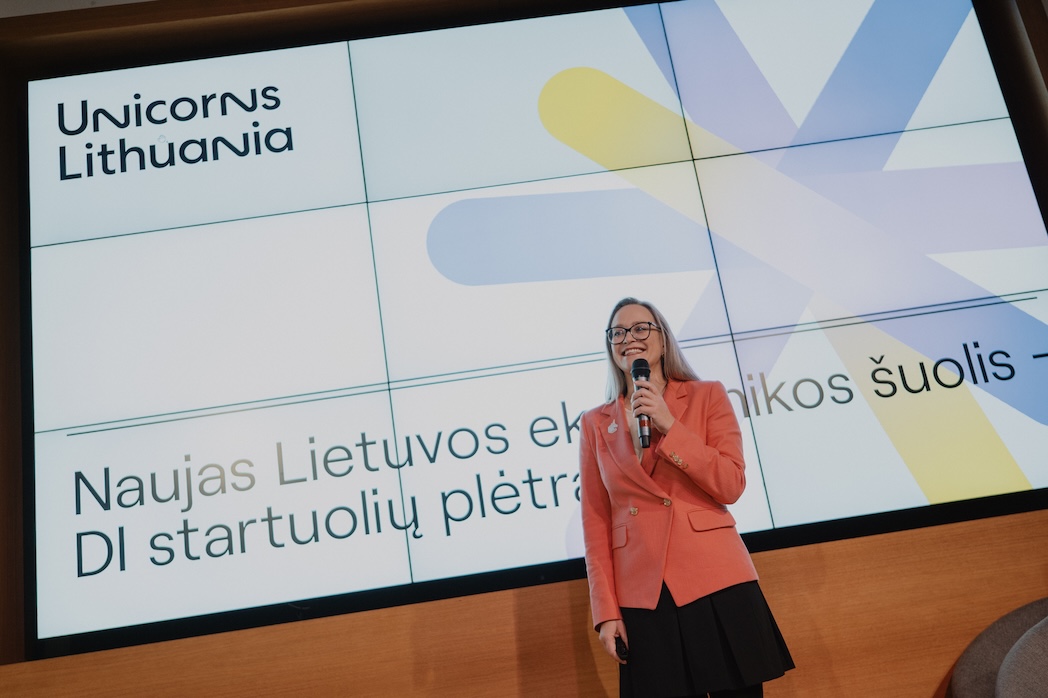
1 Gintarė Verbickaitė „Unicorns Lithuania“ vadovė Organizatorių nuotr copy

AI startups could become the new engine of Lithuania’s economic growth

January 22, 2026

Lithuania could become one of Europe’s strongest tech centres within just five years, according to the latest study by the association Unicorns Lithuania. The analysis shows that by 2030, the number of startups in the country could triple, the number of specialists employed could double, and the state budget could receive an additional €5 billion in tax revenue.

However, according to the association, such a breakthrough is only possible if the country actively fosters the creation of artificial intelligence (AI) startups. The study estimates that this would require €270 million in state investment by 2030.

Association Chair Mantas Katinas says that Lithuania’s startups have already grown from a small niche to a sector of real economic significance. Last year alone, these companies contributed almost €0.5 billion in taxes to the state budget, and the value they create for Lithuania approaches €2 billion.

Through this study, we wanted not only to understand the current state of the country’s startup ecosystem but also to assess its potential and present clear recommendations on how to unlock it. The results are concrete, data-driven proposals for actions needed to achieve an even stronger breakthrough and tangible value for the country. We hope they will contribute to shaping strategic policy and making the decisions that are needed. Lithuania’s economic future and national security depend on the success of our startups and high-tech sector.
Mantas Katinas, Unicorns Lithuania Association Chair

The association’s vision is supported by the Ministry of Economy and Innovation, which highlights innovation as a key condition for achieving high value-added growth in its economic transformation plan “3i”.

Lithuanian startups have already proved their potential. Over the past five years, the ecosystem has grown sevenfold and reached a value of €16 billion, the fastest growth in Central and Eastern Europe. Our goal is to keep this momentum going, so we will strengthen the business environment, increase flexibility, reduce bureaucracy, and focus on talent development and attraction.
Edvinas Grikšas, Minister of Economy and Innovation

Startups grew largely on their own, but have hit a ceiling

Unicorns Lithuania CEO Gintarė Verbickaitė notes that until now, startups have expanded mainly through their own efforts, without major investment, driven mostly by ambition.

But that phase is over. The study reveals a worrying trend: while existing startups are growing impressively, very few new ones are emerging. We’ve hit a ceiling, caused by a double challenge. On one hand, young companies still struggle to attract early-stage capital. On the other hand, funds investing at this stage say the opposite, they see a lack of strong, investment-ready teams.
Gintare Verbickaitė, Unicorns Lithuania CEO

Therefore, the study’s recommendations focus on the earliest stages of ecosystem development and fall into three categories: fostering youth entrepreneurship, creating an innovation-friendly environment, and ensuring sufficient early-stage funding for new startups.

These measures were developed with the AI revolution in mind, which has rewritten all previous rules—from the skills today’s students will need in the future to the tools that already allow founders to develop ideas, build, and test products faster and with less effort, even without IT skills or large teams.
Gintare Verbickaitė, Unicorns Lithuania CEO

Untapped potential: billions in returns and 18 unicorns

According to the Unicorns Lithuania CEO, advanced countries that want to be not just users but creators of cutting-edge technologies are now fiercely competing to develop AI-driven innovation.

Countries are intensively training talent locally or attracting it from abroad, creating favourable tax and regulatory systems for them, and encouraging experimentation and research. Lithuania has all the necessary competencies—we now need the right conditions for them to grow. This means the state, the education system, and business must act together
Gintare Verbickaitė, Unicorns Lithuania CEO

She emphasises that investment in Lithuanian startups already generates a tenfold return in taxes and attracted capital.

Our study shows that between 2017 and 2024, Lithuania indirectly invested around €158 million into startups through venture capital funds. During the same period, those startups paid €1.8 billion in taxes, that’s nearly a twelvefold return for the state.
Gintare Verbickaitė, Unicorns Lithuania CEO

The study estimates that implementing these recommendations could attract around €1.3 billion in new startup investment over the next five years, and around 18 startups could reach a valuation of $1 billion or more, becoming unicorns.

There are currently more than 1,100 startups and startup-grown tech companies in Lithuania, employing over 20,000 specialists.

The executive summary of Unicorns Lithuania study in English is available here

Subscribe CTA image

Enjoy reading our news?

Please wait...

Thank you for subscribing to our newsletter!

Contact us

Want to learn more about the latest updates?

Invest Lithuania is here to keep you informed about the latest news, opportunities, and developments shaping Lithuania’s business landscape. If you have any questions or would like more details, feel free to contact us—we’re here to provide the insights you need.