


- Follow us!
-

-

-

-

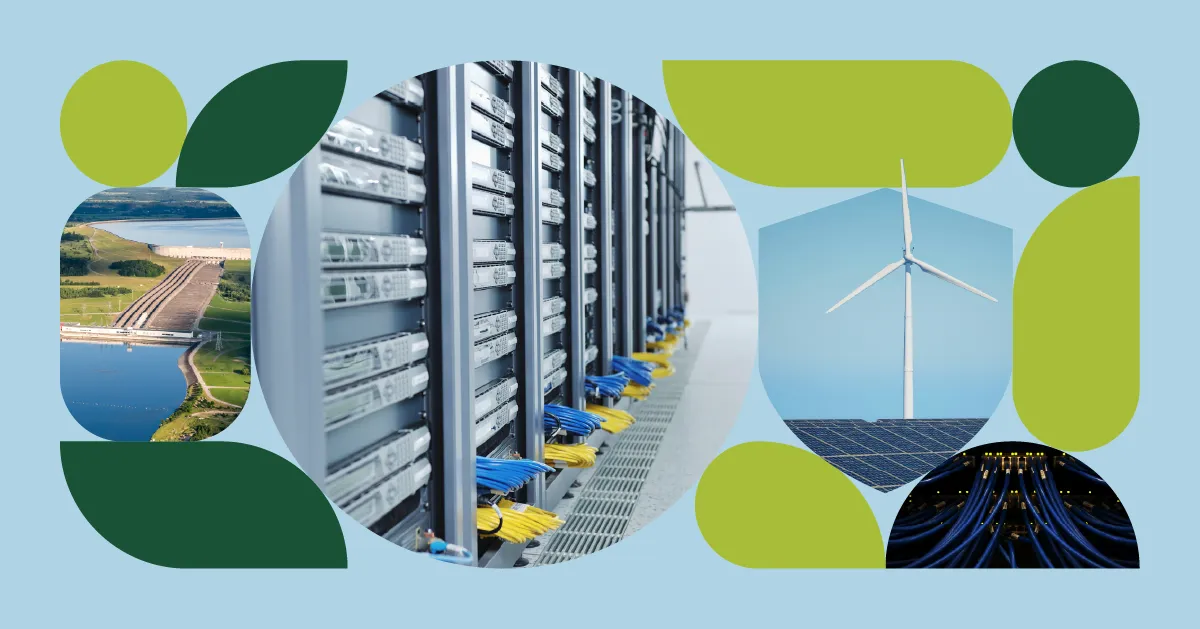
Data centers have become the backbone of modern economies – yet their role as repositories and processors of sensitive information also makes them high-priority targets for threats. With these cyber threats evolving in speed and complexity, resilience now depends as much on advanced security capabilities as on physical facilities. For investors and operators, this shifts the focus toward locations that combine strong cyber governance, dependable infrastructure, and the specialist talent needed to run secure operations at scale. Lithuania is increasingly positioned in Europe as one of those locations, offering a security-first environment alongside reliable energy and high-performance connectivity.
Global benchmarks repeatedly place Lithuania among the strongest performers in cybersecurity. StartupBlink ranked Lithuania first in Europe and third worldwide for cybersecurity (2025) and previously named Vilnius the EU’s leading city for cybersecurity (2024). Earlier, the International Telecommunication Union (ITU) assessed Lithuania as 6th in the Global Cybersecurity Index, signalling long-standing national focus on the protection of critical digital systems.
Those results are underpinned by a clear governance model. Cybersecurity oversight sits with the Ministry of National Defence and is implemented through the National Cyber Security Centre (NCSC). This setup supports swift coordination, consistent standards, and high-level supervision: elements that matter for data centre projects where incident response speed, accountability, and security assurance are decisive.
Lithuania has strengthened its regulatory landscape in ways that improve the operating environment for critical infrastructure. In 2025, it expanded national cybersecurity legislation in line with the EU’s NIS2 directive, widening regulated scope from about 300 organisations to more than 1,400 across sectors such as energy, finance, healthcare, and defence. A distinctive feature is the centralised compliance approach: the NCSC can compile the national list of entities covered by the framework, helping prevent oversight gaps and enabling clearer compliance expectations – both highly relevant to data centre operators and customers with strict security requirements.
Lithuania’s role is also regional, not only domestic. The country coordinates EU Cyber Rapid Response Teams, assembling specialists from 11 member states to detect, manage, and mitigate cross-border cyber threats. In parallel, the Regional Cyber Defence Centre in Lithuania (established with the United States and regional partners) supports information exchange, joint threat analysis, and training for Baltic and Nordic countries, aligned with NATO and EU security priorities. For investors, this visible leadership adds credibility and lowers perceived risk for locating critical digital infrastructure in the country.
Beyond cybersecurity, data centres decisions hinge on fundamentals that determine cost, uptime, and scalability. Lithuania’s case is built on three practical advantages: the availability of specialist talent, strong international connectivity, and power that is both reliable and increasingly renewable. Together, these factors make the country attractive for new developments as well as for expanding capacity in a market where resilience and sustainability expectations are rising.

Explore a fast-growing data center ecosystem powered by reliable, renewable energy, a dynamic talent pool, and a favorable cost-to-quality ratio.
A security-focused data center sector needs a steady supply of technical expertise, and Lithuania has invested heavily in building it. Universities offer established cybersecurity programmes, while state-supported reskilling efforts have helped 15,000 IT professionals transition into new roles. This contributes to a broader ICT workforce of roughly 70,000, supporting operations across cyber, cloud, infrastructure, and software functions.
Lithuania also stands out in talent renewal: it ranks first in the EU for the ingress of young specialists (15–34) entering the ICT field. That pipeline is reinforced by a vibrant technology ecosystem that includes globally visible cybersecurity players such as Nord Security, alongside public-supported venture initiatives like ScaleWolf that stimulate innovation and strengthen specialist capacity relevant to secure data center operations.
For data centers, security and sustainability are only meaningful if power reliability is exceptional. Lithuania’s electricity network performs strongly, including a 100% uptime record on 330 kV networks, a key indicator for operators who always require high availability. Energy security is further enhanced by Lithuania’s full synchronization with the European grid and independence from the BRELL system, reducing systemic risk and supporting long-term planning for large-scale facilities.
At the same time, the energy mix is rapidly getting greener. Over the last five years, Lithuania increased renewable generation capacity by around 50%. Eurostat reports that 75.8% of Lithuania’s electricity was produced from renewables last year, compared with the EU average of 41.7%. The country’s trajectory is supported by clear national targets: 100% renewable electricity consumption by 2028 and becoming a net electricity exporter by 2030. These are signals that resonate with investors seeking lower-carbon, future-proof locations.
High-capacity connectivity is another pillar in Lithuania’s proposition. The country is served by five land-based and three subsea fibre routes connecting it directly with Sweden, Poland, and key continental backbones. This architecture enables low-latency access to major European hubs, with typical round-trip latency to Stockholm (12–16ms), Frankfurt (18–22ms), and Amsterdam (21–25ms) – important for workloads that rely on fast response times, redundancy, and stable international throughput.
Lithuania’s value proposition is increasingly clear: strong cybersecurity leadership complemented by the practical requirements data centre operators care about most-talent availability, grid stability with an improving renewable profile, and robust connectivity into Europe’s primary digital corridors. As European policy and market priorities shift toward resilience, sovereignty, and sustainable digital growth, Lithuania is emerging as a credible base for the next wave of secure and efficient data center development.
This article is based on and adapted from an original piece first published by Data Center Dynamics: “Why Lithuania is Europe’s cybersecurity champion for data centers.”


Invest Lithuania is here to keep you informed about the latest news, opportunities, and developments shaping Lithuania’s business landscape. If you have any questions or would like more details, feel free to contact us—we’re here to provide the insights you need.


