


- Follow us!
-

-

-

-

Lithuania’s green energy transition is accelerating as the country increasingly follows the Nordic clean energy model in its push toward a fully decarbonised power system. By rapidly scaling renewable energy – from wind and solar to biomass – Lithuania is reshaping its energy mix while strengthening long-term energy independence. With clear national targets, growing investor interest and ongoing infrastructure upgrades, the country is positioning itself as a leader in Baltic energy transition. This strategic alignment with Nordic practices is helping Lithuania build a resilient, diversified and future-ready cleantech ecosystem.
Under its national energy independence strategy and the 2021–2030 National Energy and Climate Action Plan, Lithuania has committed to raising the share of renewable energy in final energy consumption to 45 % by 2030.
The approach mirrors the long-term, strategic frameworks seen in many Nordic countries: integrating renewable energy sources incrementally, favoring economically efficient and technologically mature solutions, ensuring policy transparency, and facilitating decentralized energy generation (e.g., via household solar or small-scale bioenergy installations).
According to the Lithuanian Energy Agency (ENA), Lithuania’s renewable energy output has grown steadily and substantially over the past decade. In 2010, renewables accounted for 18.2% of electricity production, largely driven by biomass and hydropower. By 2022, the share of electricity generated from renewable sources had increased to 41.8%, and in 2023 renewables produced 4.98 TWh of electricity – a record year driven by expanding wind and solar capacities. This steady upward trajectory reflects the country’s long-term strategic commitment to cleaner energy and reduced dependence on fossil fuels.
However, the composition of renewables has shifted over time. Historically, the backbone was solid biofuel: firewood, wood residues, agricultural waste, which remains significant. Today, growth in wind, solar, biogas and waste-to-energy is visible. For example:
This diversification echoes the Nordic model, where energy systems rely on a mix of renewables (wind, hydro, bioenergy) rather than a single dominant source, thus improving reliability and flexibility.
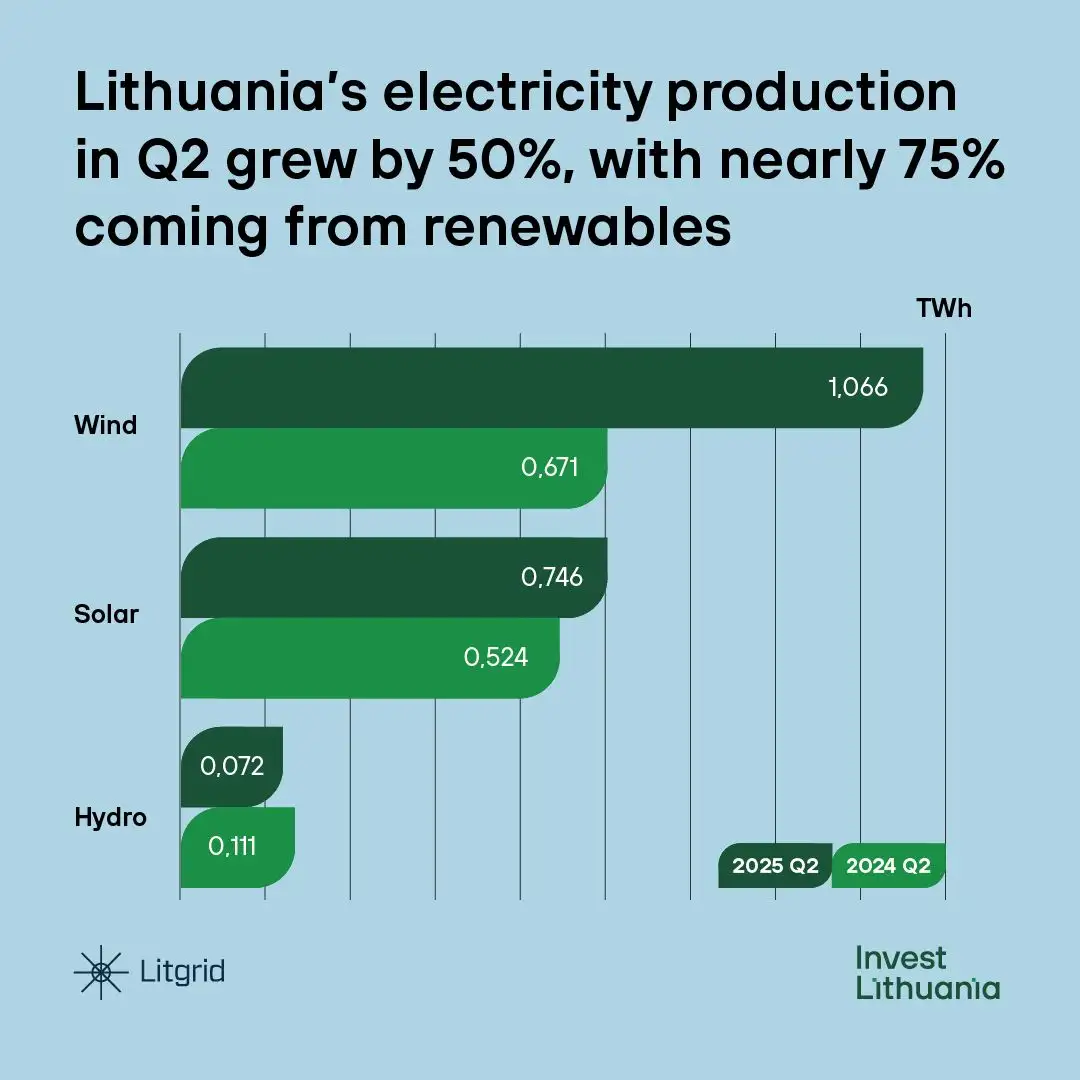
Lithuania’s electricity production.
Recent data for the 12-month period from November 2024 to October 2025 shows that approximately 65 % of electricity consumed in Lithuania comes from low-carbon sources. Wind power – increasingly central – reportedly accounts for about 26% of electricity, while biofuels and net imports contribute roughly 20–22%, and solar over 15%.
Moreover, Lithuania is actively preparing for a large offshore wind rollout. According to European environmental-energy analysis, a planned 700 MW offshore wind farm by 2030 could cover around 25% of national energy demand.
Alongside generation, Lithuania invests in infrastructure, grid upgrades, and regulatory frameworks, key conditions that have underpinned the Nordic transition.
Echoing Nordic strategies that value regional cooperation, Lithuania participates actively in Baltic-Nordic energy markets. Collaboration on energy infrastructure and harmonized regulation helps ensure stability, security and efficient integration of renewable energy across borders.
This regional orientation helps Lithuania manage variability (for example, from wind and solar), balance supply and demand, and benefit from shared resources — an approach long used by Nordic countries.
Lithuania’s ambition to achieve near-full decarbonisation of its electricity by 2030–2035 matches the Nordic ethos of combining sustainability with energy independence and resilience. Ongoing studies such as Lithuania 100% Renewable Energy study assess the technical, economic and health benefits of a fully renewable electricity system, including clean hydrogen production and improved air quality.
Still, challenges remain. Expanding wind and solar requires further investment in grid infrastructure, storage solutions, demand-side management, and legislative clarity. Public acceptance and planning of large-scale projects – especially offshore – will need continued stakeholder engagement, mirroring the transparent, socially responsible style favored in the Nordics.
Lithuania is increasingly following the path set by the Nordic countries and adopting key elements of the Nordic green energy model – combining ambitious policy, diversified renewable energy development, infrastructure investment, and strong regional cooperation. The results so far are promising: a renewable share of electricity generation exceeding 75%, rapidly expanding wind and solar capacity, and a clear roadmap toward a near fully decarbonised electricity system by the early 2030s. As the country continues scaling up offshore wind, solar, and bioenergy projects, it is strengthening both regional energy integration and energy security. With its renewable energy transition advancing steadily, Lithuania is positioning itself as a credible Baltic renewable energy leader and an attractive destination for sustainable investment.


Invest Lithuania is here to keep you informed about the latest news, opportunities, and developments shaping Lithuania’s business landscape. If you have any questions or would like more details, feel free to contact us—we’re here to provide the insights you need.


