


- Follow us!
-

-

-

-

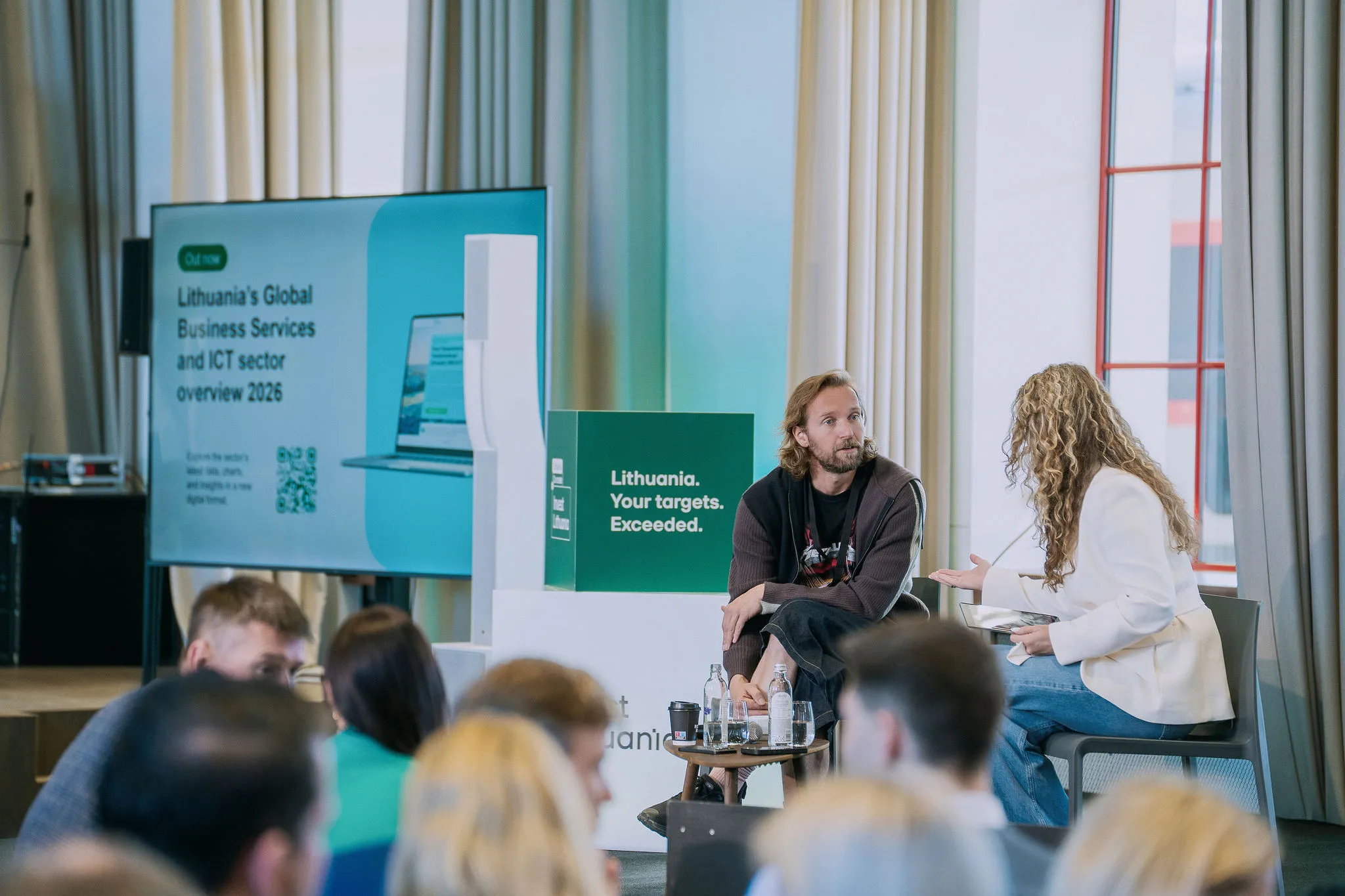
Vinted began in 2008 with a simple idea sparked by an upcoming move to Vilnius for university: instead of letting old clothes pile up in closets, why not swap or sell them online? Growth was fast and organic in the early years, spreading internationally by word of mouth – until a 2014 shift in the fee model forced a rethink.
What co-founders Milda Mitkutė and Justas Janauskas built has since grown, under CEO Thomas Plantenga, into one of Europe’s largest consumer marketplaces and Lithuania’s first unicorn scale-up.
In 2025, its users traded €10.8bn in gross merchandise value (GMV), while Vinted generated €1.1bn in revenue across its businesses. In 2026, after becoming a household name in multiple European markets, it entered the US market.
More than 2,200 people work across Vinted, including over 1,600 in Vilnius and Kaunas. This reflects a deliberate decision to keep the company’s core teams and competencies concentrated in Lithuania rather than dispersing them internationally.
We sat down with Mr Plantenga to talk about that decision, what he sees in Lithuanian talent, and what Vinted’s experience suggests about building a global company from this part of Europe.
When I landed, Vinted had around 350 people and offices in Los Angeles, Munich, Paris and London. The company was burning cash after an attempt to charge sellers a 20% fee, and there was less than a year of runway left. What struck me was that the core engineering and product teams in Vilnius were genuinely excellent – strong, talented, and driven. The team took real pride in showing that it was possible to build something successful from Lithuania.
Being Dutch, I immediately sympathised with that underdog spirit and wanted to be a part of their journey to show the world that smaller countries can punch well above their weight. I wanted to be part of this team. What was supposed to be a five-week consulting gig stretched into eighteen months of turning the business around, and then into stepping into the CEO role.
© A. Pališkis
The logic follows directly from what customers want: to sell their items fast, safely and at the best possible cost. Everything we do has to serve that. If you want to be the most cost-efficient version of yourself, you have to look honestly at where your core team should be based. It didn’t make sense to run expensive engineering or support functions out of some of the priciest cities in Europe when we had a deep, talented team already built right here.
Company structure should follow strategy, not the other way around. For us, that meant closing offices in Los Angeles, Munich, Paris and London, and rebuilding around the team in Vilnius. We centralised the core of the company – meaning, the engineering and product teams – in one place, so we could move fast and stay aligned.
You need people with solid educational foundations – able to code, do some maths and statistics. Individual brilliance matters less than the ability to learn. One of the key factors in building a winning team is being able to train people in the specific skills needed to win the game you are playing. That could be marketing, customer support or something else.
One of the most fundamental things I look for is whether a team is learning. I want to see that the new solutions they bring are smarter than the previous solutions because they have learned something from them.
I also want to see a consistently humble attitude from leaders. They should be able to say, “I don’t know how this works. I have this problem, and I don’t know how to solve it.” The moment a leader starts saying that they are great at something, that is usually the beginning of the end. If you think you are fantastic, that is really dangerous for learning.
Leaders need to create an environment that is challenging but safe. It should be safe to fail, but failure itself should not be celebrated. What should be celebrated is learning, innovation and winning.
It’s changing things in three ways, all playing to our strengths. On the simple end, engineers now use tools like Copilot to code faster and catch bugs sooner. We are seeing pull requests move faster, resulting in a productivity improvement of around 30-40%. These productivity gains continue to grow as people learn how to use these tools more effectively.
Then there is customer support. Around 30% of requests are now automated, and we expect that share to continue growing. We are also using AI to measure whether members are happy with the responses they receive and to help train our teams to provide better responses.
The biggest gains at the moment come from integrating AI directly into the product, particularly in the recommendation engine. This includes recommending prices, colours and items based on what people have previously viewed or liked. You could simply integrate APIs from external AI providers, but the real differentiation comes from building the infrastructure to orchestrate these models effectively, labelling the data properly and testing which variables and inputs produce the best results.
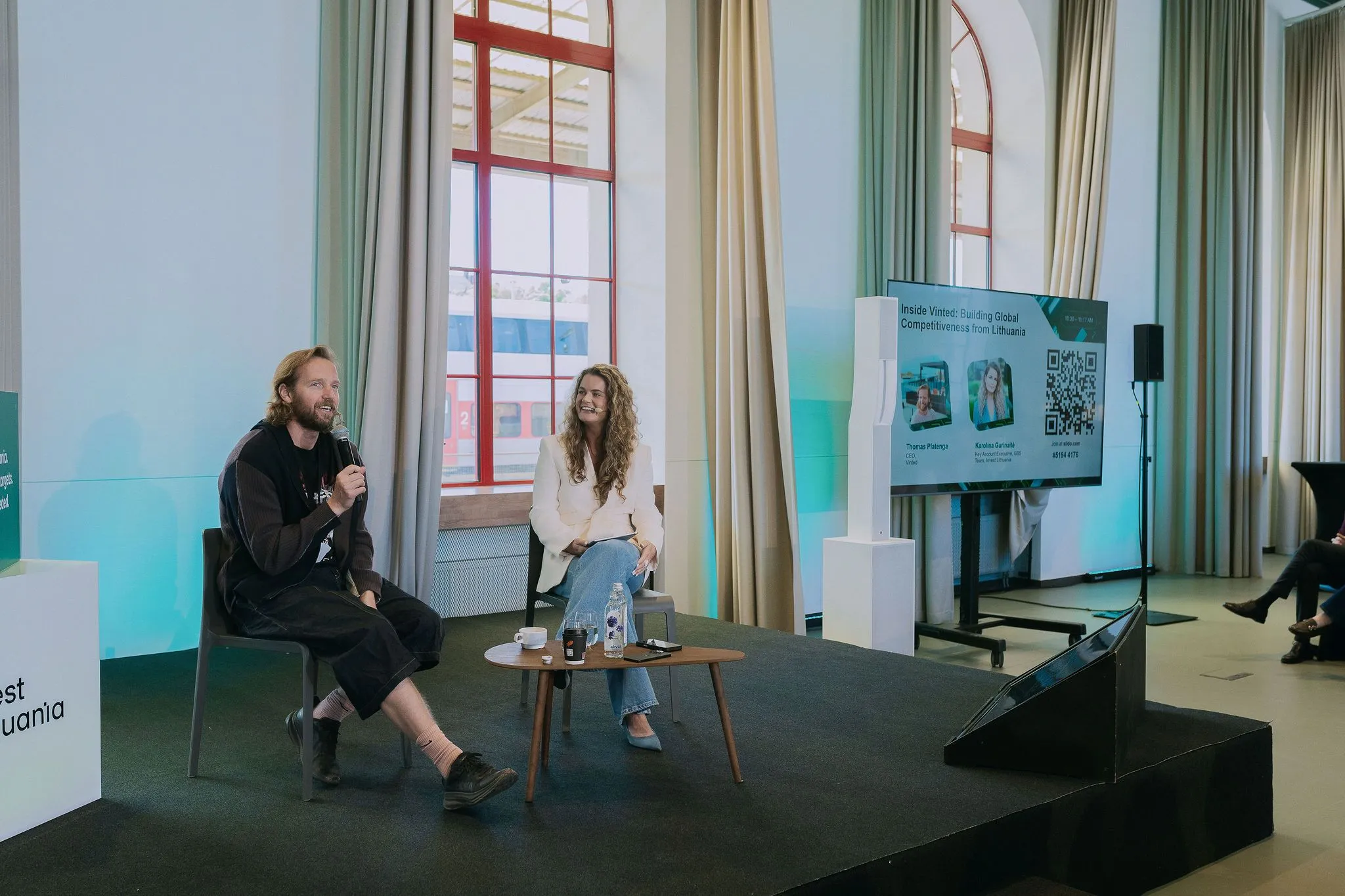
© A. Pališkis
Our culture has changed over the last decade – it had to. The culture we needed ten years ago to change the company was more naive, impulsive, somewhat more aggressive and less mature. It allowed us to make major changes even though we did not yet have all the necessary knowledge or experience.
As we grew, the culture became more controlled and more mature. The core elements that have remained are fairness and empathy, combined with a willingness to put ourselves in uncomfortable situations when that benefits us in the long term. For me, empathy means genuinely listening and understanding what a person or team needs in order to excel. Fairness means being transparent about how the company operates, what matters to it and why particular decisions are made.
We can have very direct, sometimes quite harsh discussions because we are trying to get to the truth. But those discussions only work when people know they are constructive. I can strongly disagree with your idea and still have your back as a teammate. When leaders can separate those two things, that is when you get innovation. I think Lithuanians are exceptionally good at this kind of directness.
I think Lithuania has what it takes to build globally competitive teams. The raw talent is here, and so is the right culture. People are willing to work hard, learn and build something that goes far.
That is also why we are hiring most of our people in Lithuania. We are not doing it because it is easy. We are doing it because I believe this is some of the best talent for building a global company.


Invest Lithuania is here to keep you informed about the latest news, opportunities, and developments shaping Lithuania’s business landscape. If you have any questions or would like more details, feel free to contact us—we’re here to provide the insights you need.


