


- Follow us!
-

-

-

-

Lithuania’s biotech industry has rapidly evolved into one of Europe’s most dynamic innovation ecosystems. With a strong culture of scientific R&D, a collaborative talent base, and increasing investment flows, biotechnology in Lithuania is accelerating breakthroughs in health, materials, and sustainable solutions. Among the leading examples is Biomatter – a Vilnius-based deep-tech company applying artificial intelligence to one of the most complex challenges in modern science: protein design.
As the global bioeconomy shifts toward sustainable biotechnology solutions, Lithuania’s biotech sector is showing how advanced computational tools can unlock next-generation biomaterials and contribute to a more sustainable economy worldwide.
Over the past decade, Lithuania’s biotech sector has expanded at double-digit annual rates, supported by robust R&D infrastructure, strong academic collaboration, and a rapidly maturing startup ecosystem. One of the examples is a €7 billion investment into developing BIO CITY, a life sciences hub in Vilnius over the next decade.
The rise of companies like Biomatter, Delta Biosciences or Ligence demonstrates Lithuania’s ability to nurture advanced life sciences research. Key enablers include:
This environment has enabled Lithuanian teams to establish a reputation in frontier life sciences, particularly where biology meets AI.
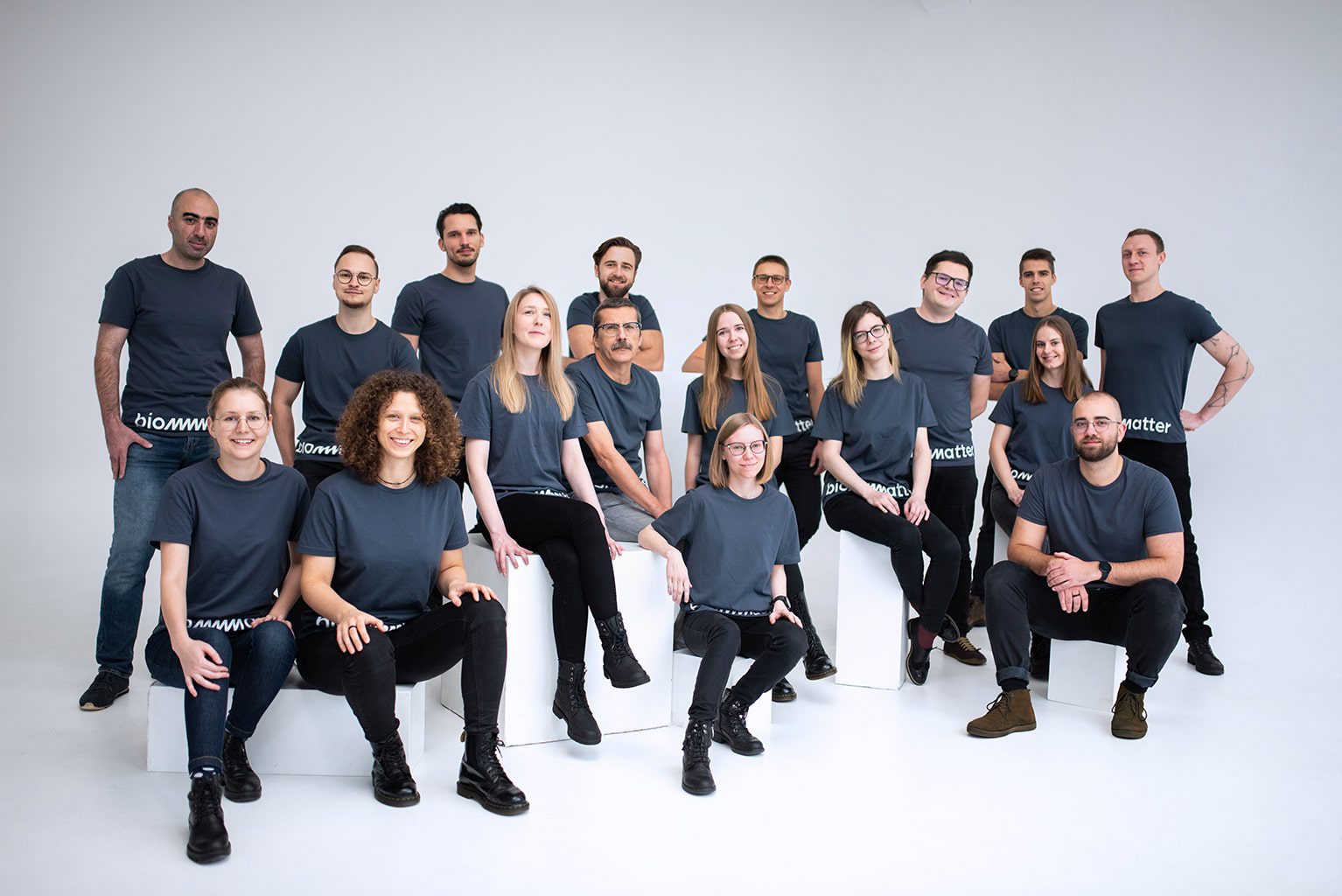
Biomatter team. © Biomatter
Biomatter stands at the forefront of this emerging field. The company develops AI platforms capable of designing entirely new proteins and enzymes – molecular machines that power all biological processes. These new-to-nature proteins can outperform existing biological materials in efficiency, functionality, and environmental footprint.
Protein engineering traditionally relied on slow, costly lab experiments. Biomatter uses deep generative models (similar to the algorithms behind language AI) to explore vast biochemical possibilities in minutes rather than years. This approach allows researchers to:
By combining computational design with Lithuania’s strong biotechnology engineering capabilities, the company is helping to redefine how global biotech innovation is created and scaled.
Sustainability is becoming central to biotechnology worldwide, and Lithuania is emerging as a contributor to greener solutions. AI-designed biomaterials can replace traditional chemical processes, lower industrial emissions, and unlock biodegradable alternatives for manufacturing, consumer products, and energy systems.
Biomatter’s work aligns closely with Europe’s ambition to build a resilient and sustainable bioeconomy. Engineered enzymes, for example, can enable cleaner pharmaceuticals, circular plastics, and more efficient biomanufacturing – all key components of sustainable biotech in Europe.
As demand grows for low-impact solutions, AI-enabled design is providing the speed and precision needed to transform global supply chains.

Explore a fast-growing biotechnology ecosystem powered by robust R&D, strong governmental support, and a skilled workforce.
The success of Biomatter illustrates how biotechnology in Lithuania is entering a new phase: one defined by deep-tech, computational biology, and sustainable materials innovation. By applying AI to protein design, Lithuanian researchers are helping to solve global challenges in health, manufacturing, and environmental sustainability.
As the world looks for scalable, sustainable biotechnology solutions, Lithuania’s biotech industry is demonstrating its potential to drive the next generation of bio-based innovation. For investors, researchers, and companies seeking a forward-looking ecosystem, Lithuania offers a strong foundation for breakthroughs that advance both industry and the sustainable economy.


Invest Lithuania is here to keep you informed about the latest news, opportunities, and developments shaping Lithuania’s business landscape. If you have any questions or would like more details, feel free to contact us—we’re here to provide the insights you need.


