


Interview | “Vilnius is the place to build”: TransferGo’s CEO on trust and AI
We sat down with Daumantas Dvilinskas, co-founder and CEO of TransferGo, the international money transfer company to talk about his journey growing a globally recognised fintech from Vilnius, and how AI is transforming what regulated businesses can do.
TransferGo started as a creative solution to a problem four Lithuanian friends were encountering in another business entirely. Trying to transfer funds for their import and export business was slow, expensive and a little opaque. Accountability was unclear, meaning money could get lost and compensation was less than forthcoming. The fix they set out to build was simple to say and hard to do: tell people what will happen to their money, then follow through.
With little background in regulated finance, the four were able to raise €50,000 and launched with a single route and 10 customers.
Nowadays TransferGo operates around 1,600 routes connecting the European Union and the UK with 150 countries. So far, it has served more than 9 million customers globally, and it’s only getting started.
The company’s mission has held steady since day one: to take the cost, delay and guesswork out of sending money abroad. 14 years on, it comes down to one promise to people and businesses connected to more than one place: money, as expected.
You could say that the success story of TransferGo mirrors the story of the Lithuanian fintech ecosystem itself. Plucky talent with the best kind of builder mentality, building international solutions with increasingly international teams. All from a local base, but with a global mindset embracing the opportunities of AI.
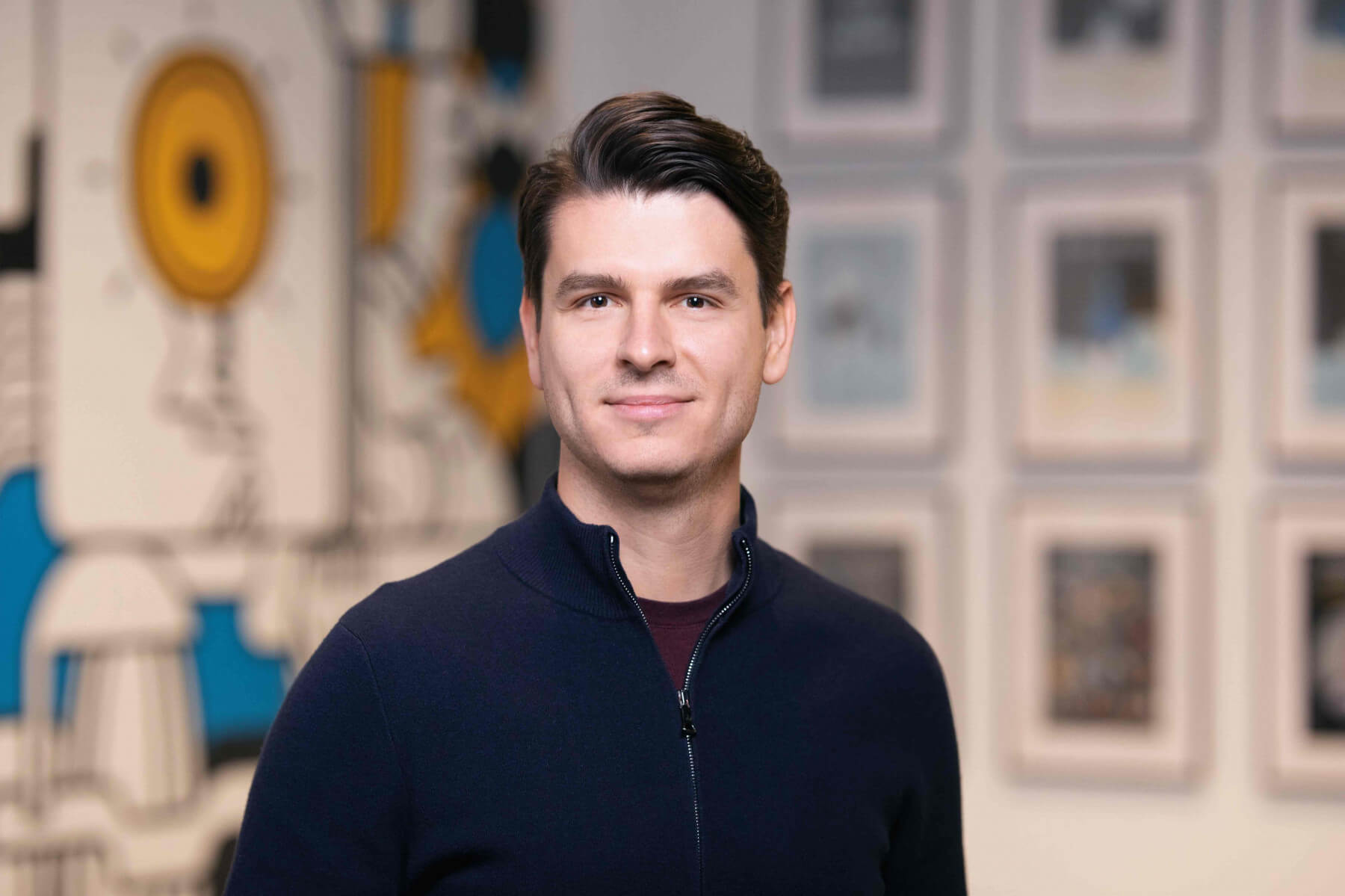
Daumantas Dvilinskas, CEO and co-founder at TransferGo. © TransferGo
When did you realise TransferGo could become something big?
The first cheque that we raised was 50,000 euros. And even when we got that cheque, we felt the inspiration to build something much bigger than probably most other, more rational people would consider. Our story was a story of frustration with banking and payments. We thought that this should be done much better, even though we didn’t really know how.
But also, ours was a story of positive delusion about what it really takes to build a regulated business. Regulation was a new field to all of us, and what we needed to explain is why on earth anyone should trust four people in a room. So, the trust aspect has been a key proof point.
Four people in a room with a big vision – did it click for all of you at once?
It’s fair to say that a lot of people probably thought to themselves that my vision was delusional for a long time. And that was the advantage we had – the ability to paint a story that was always bigger than what we could imagine. All we were trying to do was to catch up. Some of us were more interested in the users, others in the kind of company we could become. The combination of different points of view is really what made it work.
How did that shape the way you built your team?
From the very start, the management team was actually half and half – a mix of Lithuanian and international talent. Over time, as the company has developed, so has the talent pool in Lithuania. And that development has accelerated beyond any expectations – today, there’s a whole generation of people who know how to build international businesses.
The core leadership team is now based in Lithuania. And we have people with more than 10 years of experience who have been continuing to build excellence. A lot of what we now call Lithuanian talent cut their teeth abroad and then made the conscious choice to come back home. I consider myself part of that group now.
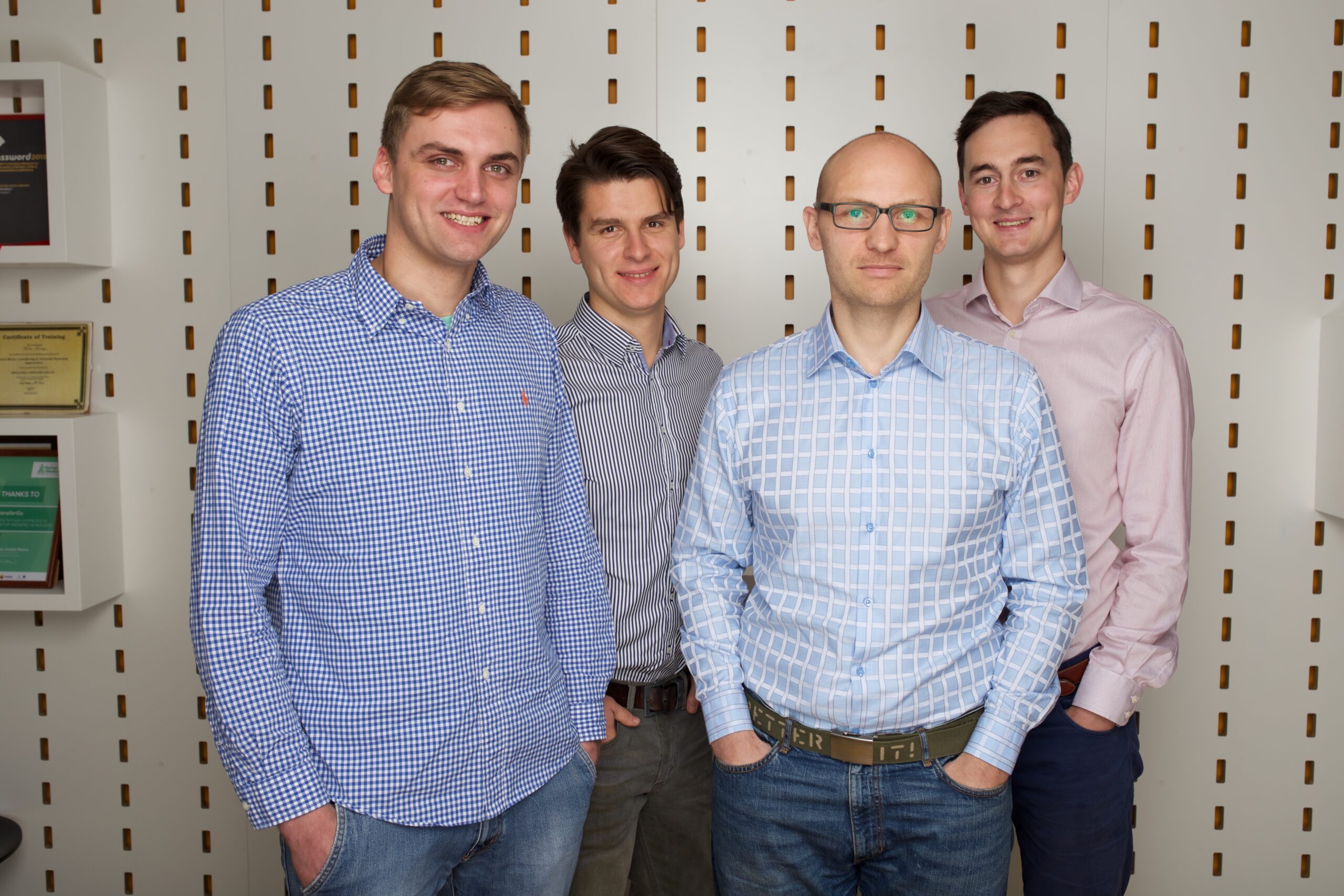
TransferGo co-founders: Edvinas Šeršniovas, Daumantas Dvilinskas, Arnas Lukosevicius, Justinas Lasevičius. © TransferGo
Lithuanians used to go abroad to learn how international businesses are built. Could Lithuania now be the place people come to learn it?
The hunger and the energy in the city are palpable. It is just everywhere. Right now, this place is buzzing, in the best possible way. So I think if people want to build, if people want to innovate, if people want to really build globally competitive products and services, this is the place. Vilnius can hold its own against any European tech hub, Berlin included.
Lithuania is often described as a place where everyone is one phone call away. Is that part of the appeal?
Oh, yes, everybody knows everyone. But the best part is also not that it’s small, it’s the group of people that is now leading the ecosystem. I think their hearts are in the right place. So there’s a whole critical mass of people who have access to capital, who also have the right vision for the country, and for companies. It’s so easy to build wealth and keep it for yourself, but here there’s a healthy amount of people who are not doing that. And it’s really good to see.
And does that sense of community stop at the border? There’s a growing feeling in the ecosystem that the Baltics are stronger together than Lithuania, Latvia and Estonia on their own.
100%. And I’d also include Poland. I mean, we are kindred nations. As countries, we can learn from one another. I think if we are regionally strong, then we are much bigger than the sum of the parts. Baltic integration is long overdue, and I think it’s happening and on the right trajectory. But I believe Poland is really the missing piece here and we should do more to collaborate. On innovation, on talent and on everything else. And we can see that this is already happening. But I think we should all be a bit more regionally minded in that respect.
Talking of innovation, how central is AI to TransferGo’s strategy?
The reality of regulated businesses is that companies often provide inferior experiences because of poor data. And poor information about their customers. What AI does is turn these complexities into simpler operations if you deploy it. For a business like ours, which has huge amounts of complexity – AI is crucial to making it scalable. It has immense potential.
Is AI also behind your move from money transfers towards everyday money management?
It’s a natural progression really. You start moving money for an individual and they like the experience and they stay with you for years. They then want more services, so the whole process develops organically. If you’re using us for payments – here’s your TransferGo Account, here’s your GoCard, here are your local payments, here are other products. So that’s what drives us there. This opportunity to provide an all-encompassing service.
And here again we can leverage what AI does best, use the complex information we have and transform it into a more predictable experience: the amount, fee and expected delivery time shown upfront, and clear updates if a transfer needs a check. When you build, the quality of the solution depends on how well you understand the customer. And thanks to AI we now understand our customers way, way better.
And these AI tools are being built in Vilnius?
Yes, I think we have a critical mass of people who are confident to let their imagination run. And they were not afraid to give it a try. And that’s what we’re encouraging everybody to do, because everybody now can be a builder with AI-assisted coding. And by building you can truly understand what’s possible. And then once the imagination is triggered – then, well, there are no limits. Technology is no longer a limiting factor. All our tools are being created by an international team, but all from here.
How does Lithuania compare in AI?
I think that what’s a real pity is that Europe still doesn’t have enough AI infrastructure of its own. However, in terms of applying AI – how you take AI and use it for your businesses, I think we are seeing a lot of different businesses really take it up. A good example here is what Oxylabs is doing in the web data market, which is booming. Hostinger is making huge inroads with applied AI, which they bring to regular consumers. So I think in terms of applying AI to different real-life contexts, Lithuanians are really being creative and paving the way.

TransferGo office. ©TransferGo
What should Lithuania focus on next?
That’s a really interesting question. And it’s something I think about quite often. I believe that Lithuania should have a smart tax regime review that focuses more on social inclusion, one that benefits both innovators and society as a whole. Let me explain. We need to make sure that people who are not benefiting yet that much from the startup revolution get a fair share. After all, we’re only as strong as our weakest link.
But we also need to provide a good tax incentive that really motivates the risk takers and innovators at the same time. And both of these things can be done. You can have tax incentives for investors and attract capital here, know-how. And you can have a fair tax regime that also makes sure that people who are teachers, who are doctors, who are the bedrock of our economy – they receive a wage that reflects the impact they have.
The story of us playing catch-up is well and truly over. In the next five years we need to establish ourselves as an innovation hub, and give back to the European Union, which invested in us when we were still a young country. To do this, we need to answer the question of how we can build sustainable IP and sustainable equity here for everybody? If we can crack that, and have everyone working together, well, I think you’d agree, that would be pretty cool.
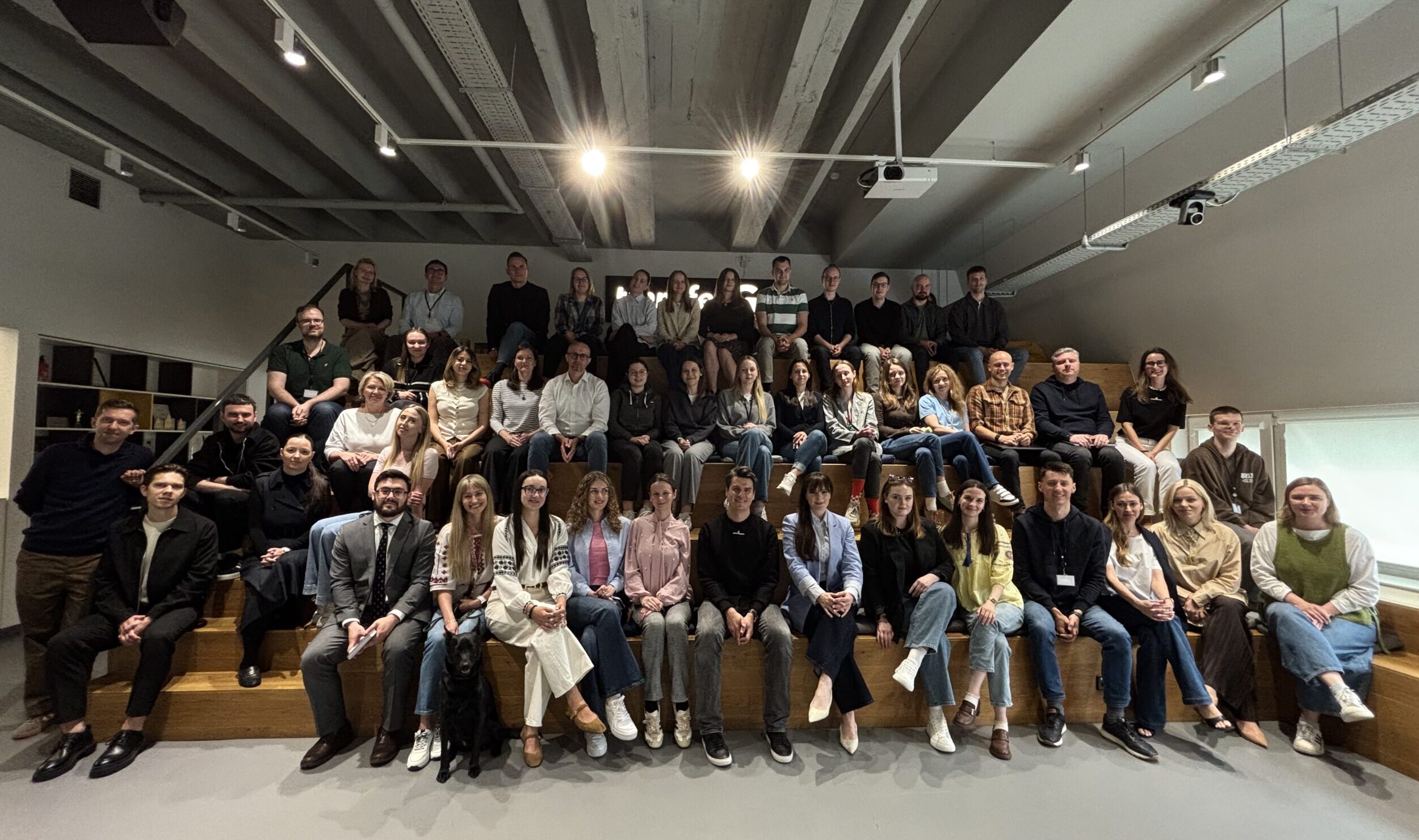
Ukraine’s Ambassador meets with the TransferGo team. © TransferGo

Enjoy reading our news?

Want to learn more about the latest updates?
Invest Lithuania is here to keep you informed about the latest news, opportunities, and developments shaping Lithuania’s business landscape. If you have any questions or would like more details, feel free to contact us—we’re here to provide the insights you need.
- Share now:
-

-

-

-
