Lithuania's Fintech Overview 2025-2026

From Launchpad to a Base for Scale

Over the past decade, Lithuania has built the regulatory expertise, market credibility, and operational foundations needed to support established fintech businesses. That foundation is now translating into scale, deeper capabilities, and long-term market confidence.

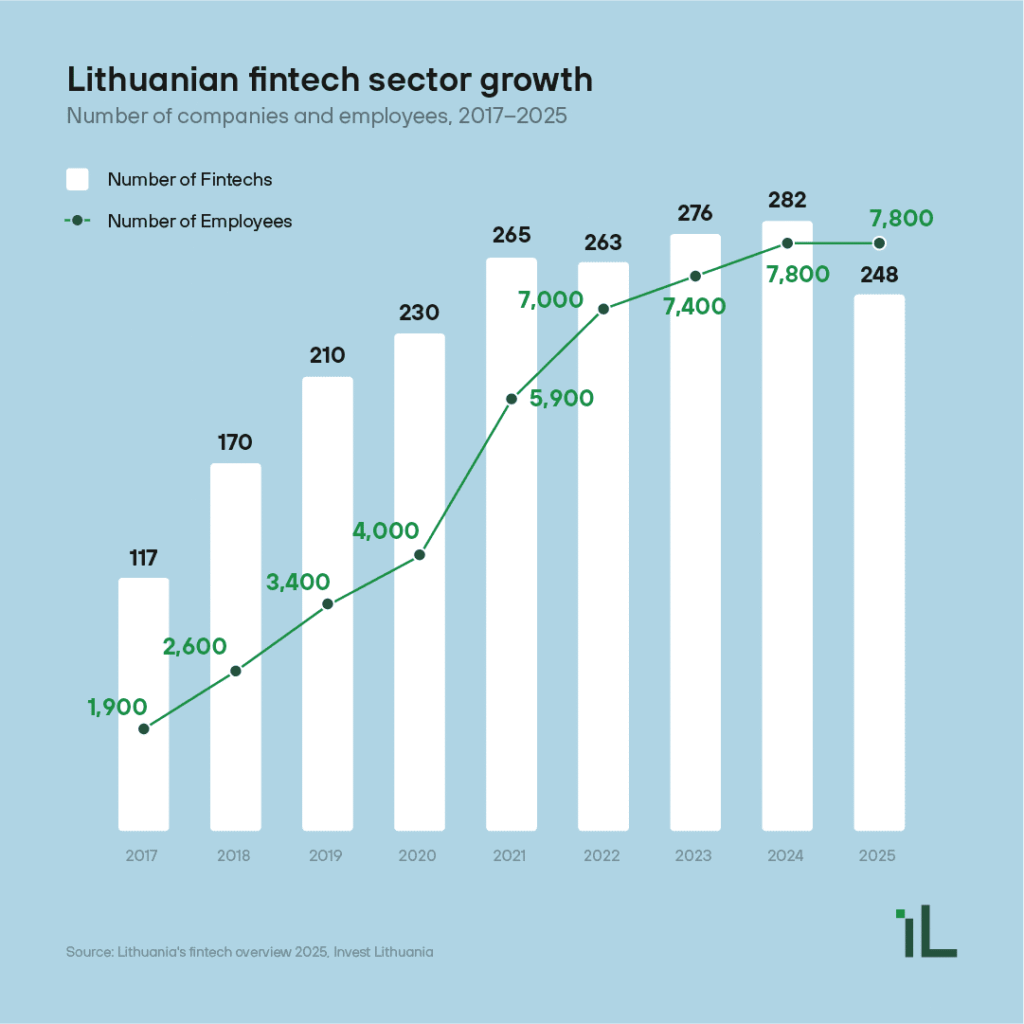
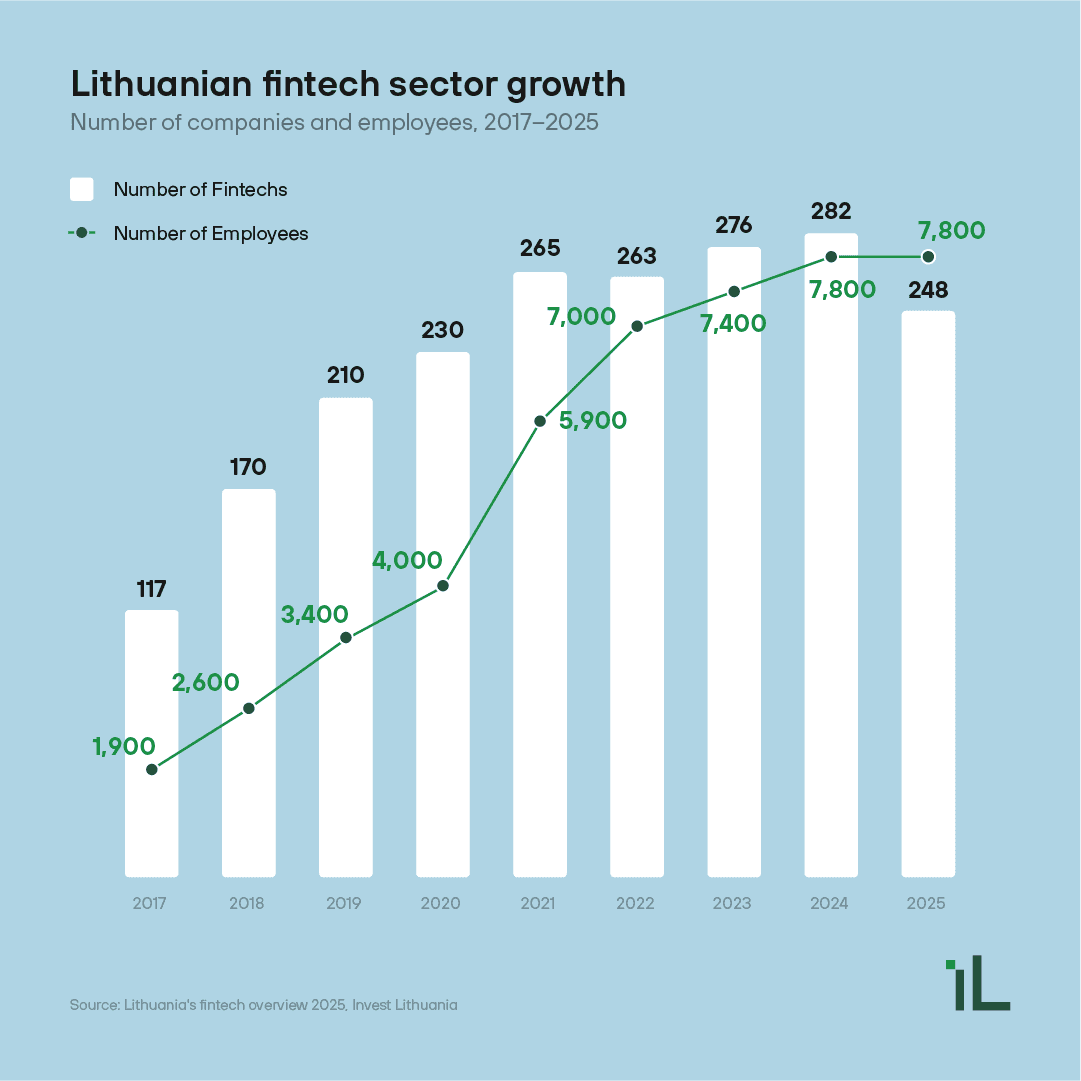
Lithuania’s fintech ecosystem is moving into a more mature stage of growth. In 2025, the total number of companies operating in the market edged down slightly, but the sector’s talent base remained robust, with nearly 8,000 professionals across the ecosystem. Rising average team size also signals a clear shift: growth is increasingly driven not by the number of firms alone, but by the strength, scale, and resilience of the businesses being built in Lithuania.

Listen to the overview
The insights presented in this overview draw on unique data collected by Invest Lithuania – a structured dataset capturing the composition, growth, and operational scale of fintech companies operating within the Lithuanian ecosystem.
Our methodology combined desk research with an online survey of fintech companies operating in Lithuania. At the end of 2025, we identified 248 registered and active fintechs operating in the country. Desk research provided data on their location, revenue, and business activities, while 62 companies participated in the survey, offering additional insights into operations, talent, funding, and future prospects.
Insights And Reports Icon

Lithuania's Fintech at a Glance

1st in the EU
by number of fintech licenses issued, making Lithuania the bloc’s largest fintech hub
Around 40M
EU customers served by fintechs licensed in Lithuania
248
fintech companies operating in the country, with 7.8k people employed in the fintech sector
Strategic direction

Strategic direction

Lithuania’s fintech ecosystem is evolving with greater emphasis on resilience, diversification, and value creation. This direction is reflected across key institutions – including Invest Lithuania, the Ministry of Finance, and the Bank of Lithuania – and supports the development of a fintech sector built not only for growth, but for long-term sustainability.

Lithuania's Fintech Landscape 2025

The strength of Lithuania’s fintech ecosystem is no longer measured by company count alone. Talent growth across the sector highlights deeper capabilities and continued strength in Lithuania’s fintech talent base. The latest figures also point to a natural phase of consolidation and a stronger focus on resilience and sustainable growth.
GRanonytė
Lithuanian Fintech Association
In Lithuania, the assets of specialised banks reached EUR 1.665 billion in the third quarter of 2025 – 182% higher than at the end of 2022. By the end of 2025, the value of payments processed by electronic money and payment institutions had increased by 60% compared to 2022, reaching €166 billion. Over the same period, the amount invested via Lithuanian crowdfunding platforms grew by 74%, reaching €280 million. This growth highlights that the fintech sector is expanding not only in size but also in depth and economic significance.
Greta Ranonytė
Head of Lithuanian Fintech Association

Lithuanian fintech sector growth

Number of companies and employees, 2017–2025

Number of Fintechs
Number of Employees
Source: Lithuania's Fintech Overview 2025-2026, Invest Lithuania

The main advantages of operating in Lithuania, according to fintechs

Lithuania’s competitive advantage as a fintech location continues to rest on a combination of EU market access, a strong local talent base, and advanced digital infrastructure – factors that matter most to companies building and scaling regulated financial services.
Source: Lithuania's Fintech Overview 2025-2026, Invest Lithuania

Key Takeaways

In 2025, Lithuania’s fintech sector reflects a clear shift from rapid expansion to structural maturity.
Lithuania’s competitive advantage as a fintech location continues to rest on a combination of EU market access, a strong local talent base, and advanced digital infrastructure – factors that matter most to companies building and scaling regulated financial services.
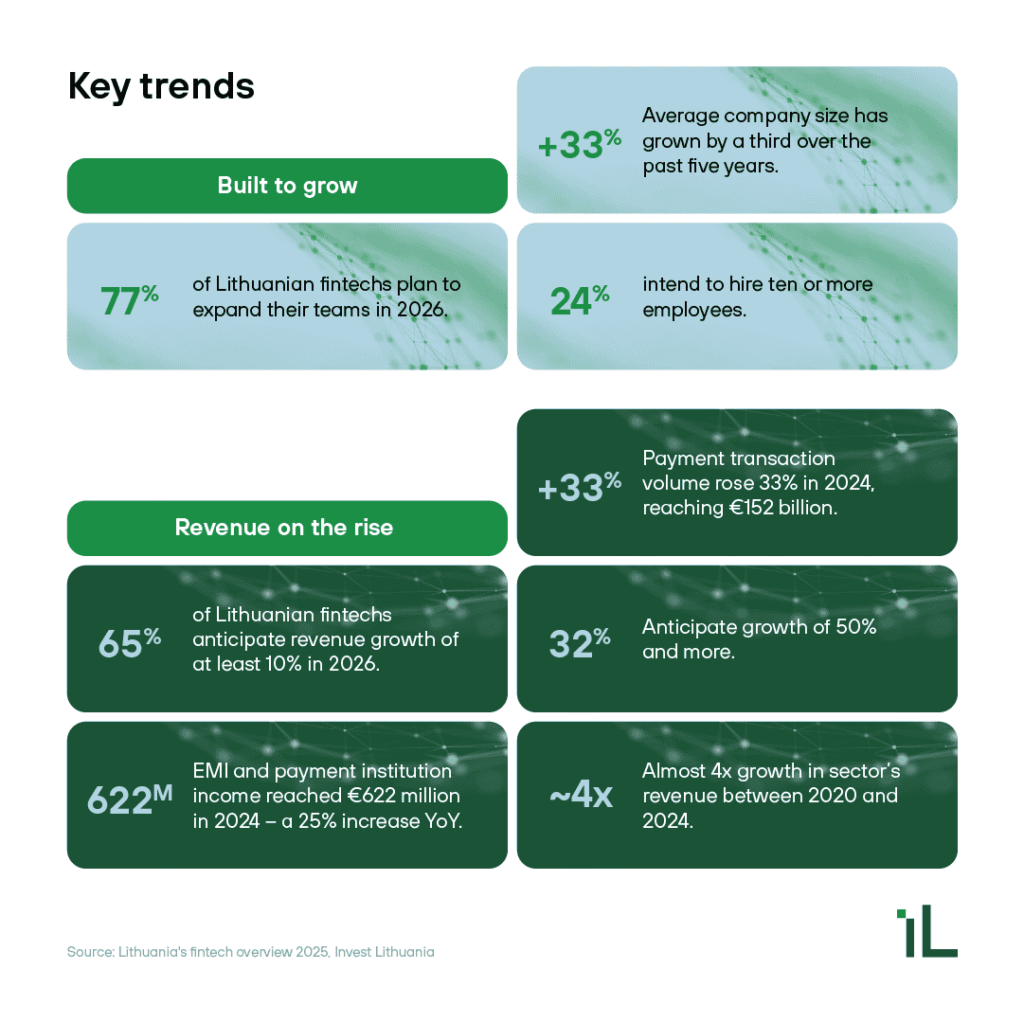
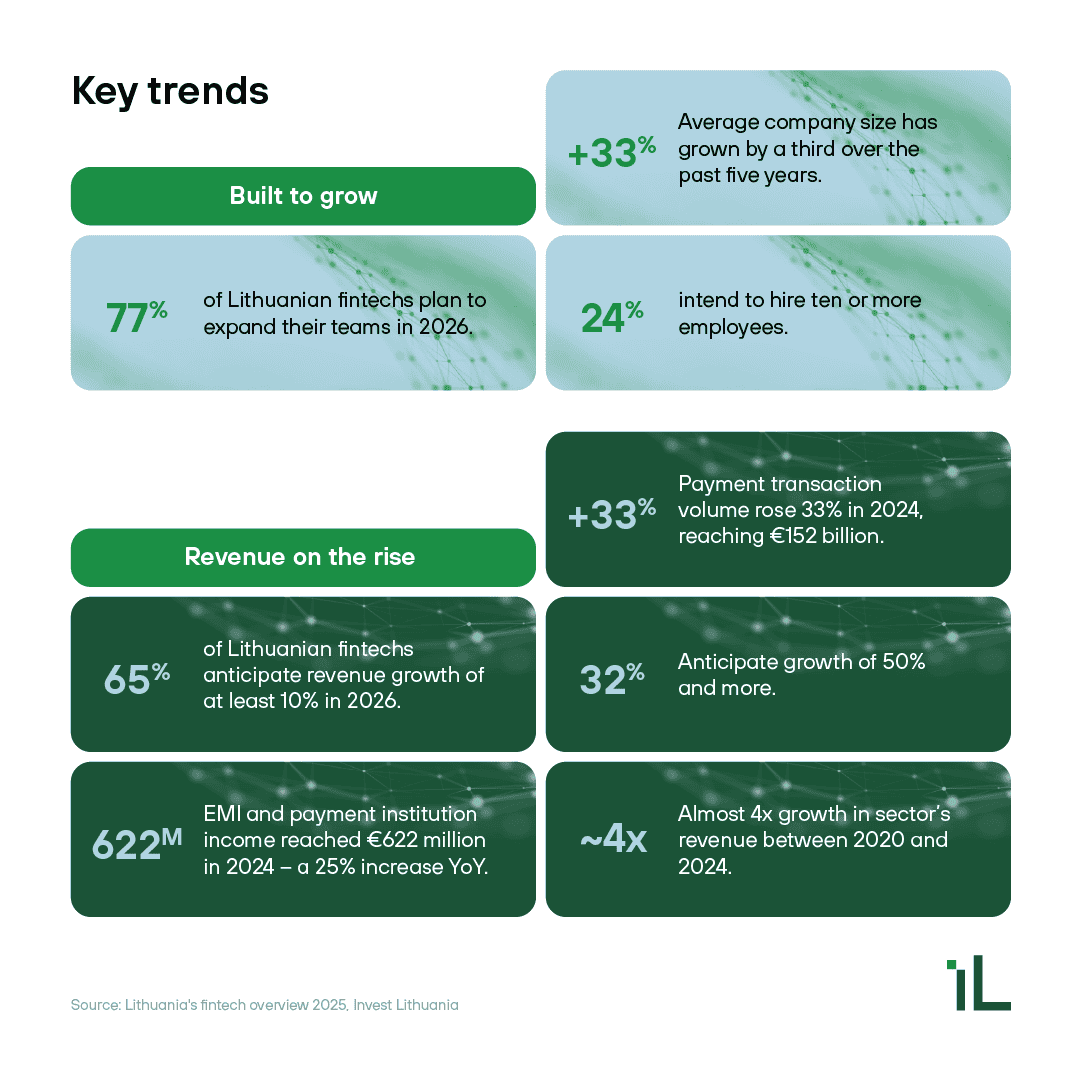
77%
of fintechs in Lithuania plan to expand their teams in 2026
Maturing market
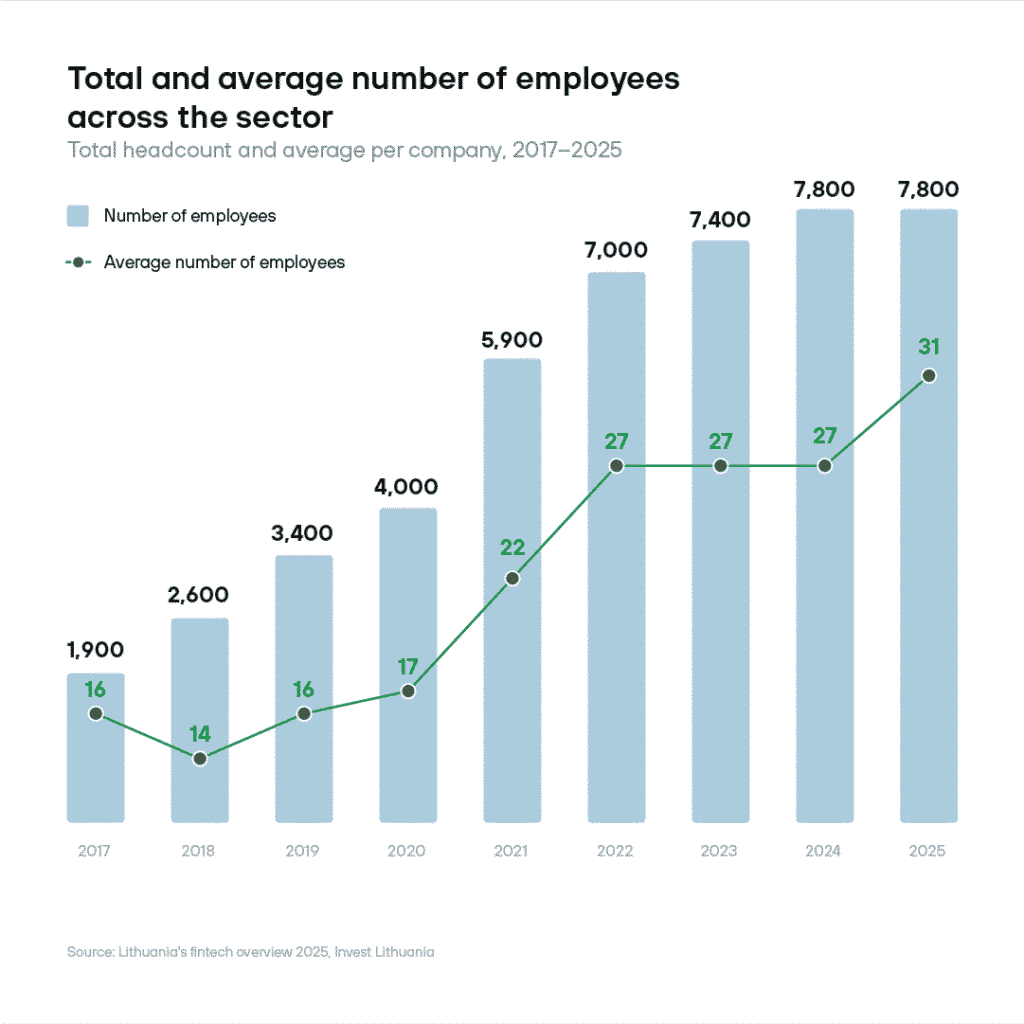
A decade in, Lithuania’s fintech sector is defined by its depth of expertise. A talent pool of nearly 8,000 professionals has driven average company size up by a third over the past five years.
+1/3
average company size up by a third over the past five years
Study programs
With 9 dedicated fintech study pathways across universities and colleges, Lithuania is actively building the next generation of fintech talent
Talent
With sector revenue having grown almost fourfold between 2020 and 2024, and growth expectations remaining robust, Lithuania’s fintech sector continues to perform strongly.
65%
of Lithuanian fintechs anticipate revenue growth of at least 10% in 2026
32%
expect growth of 50% or more
Growth
Growing M&A activity points to increasing strategic interest in fintech companies operating in Lithuania. It suggests confidence in the sector’s long-term potential and in the value of the businesses being built here. As more globally competitive solutions are developed locally, Lithuanian fintech companies are becoming more attractive to investors and strategic buyers for their capabilities, efficiency, and ability to scale.
Checkout.com acquires Blue EMI, a licensed issuer of euro stablecoins, and establishes Lithuania Technology Centre
Ebury acquires ArcaPay to increase competition in the Baltics Corporate Banking Sector
MA
Contact us dark green

The real insights are in the details

Connect with Invest Lithuania’s fintech experts to get the full Lithuania Fintech Overview 2025–2026.

Fintech Talent in Lithuania

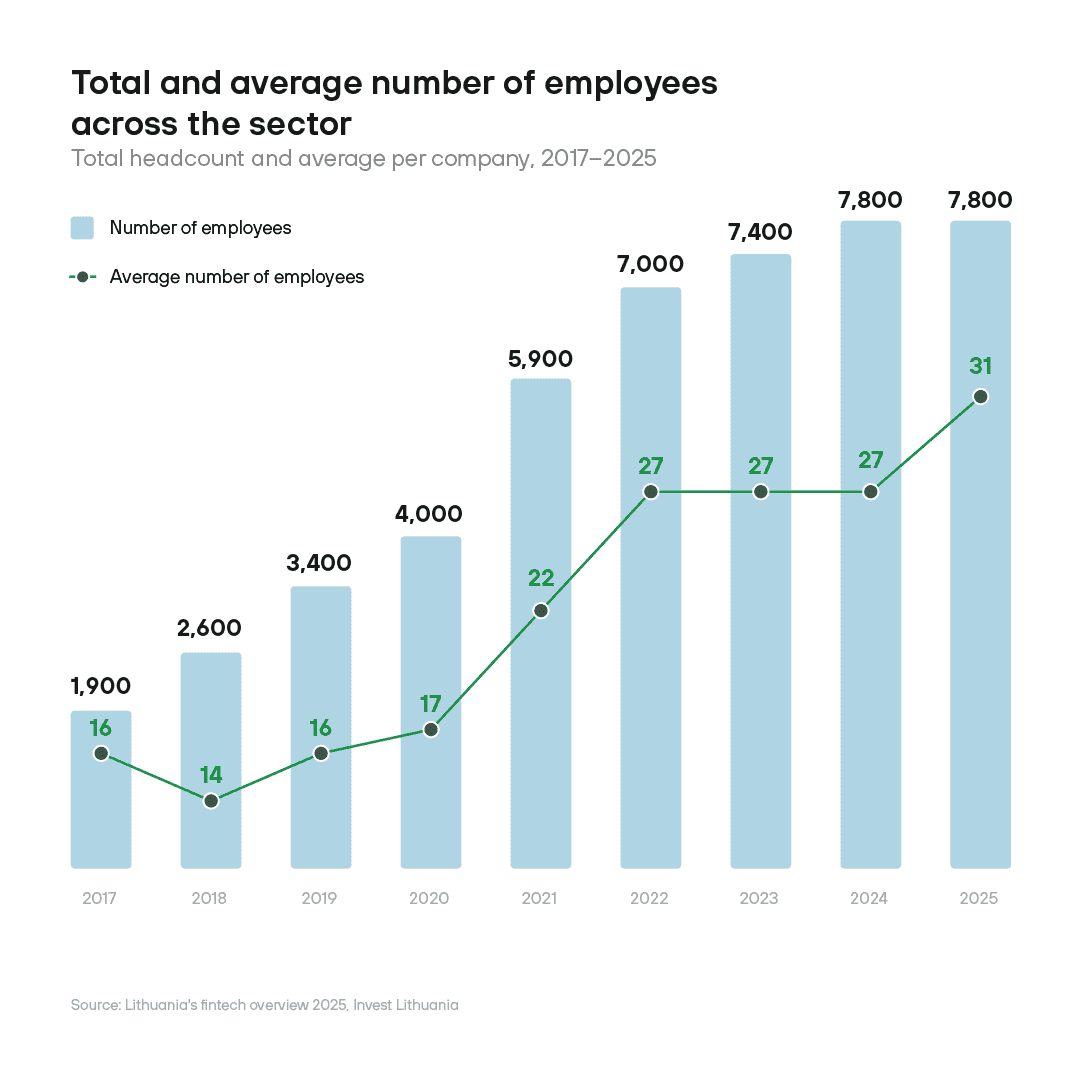
Lithuania’s fintech workforce is the product of nearly a decade of ecosystem development – including compliance professionals, regulatory specialists, and technical teams that have grown within a complex, EU-regulated environment. This accumulated expertise is now one of the sector’s most durable strengths.

Total and average number of employees across the sector

Total headcount and average per company, 2017–2025

Total number of employees
Average number of employees
Source: Lithuania's Fintech Overview 2025-2026, Invest Lithuania

The talent behind modern banking

Lithuania’s talent has developed deep competencies in fields rapidly becoming central to modern banking, backed by an established pipeline of qualified professionals.
78K
ICT specialists
14K
compliance and risk management specialists
Talent behind modern banking
Diversity

Diversity that drives ambition

Lithuania’s fintech workforce stands out not only for its capabilities, but also for its composition – in terms of age, international make-up, and share of women.
87%
of employees are under 45
58%
of companies employ international staff in their Lithuanian office
48%
of employees are women

Building Lithuania's Fintech Community

Lithuania’s fintech community is genuinely global and functionally diverse. Across payments, neobanking, investing, BaaS and more, the breadth of companies operating in Lithuania reflects a mature, full-spectrum ecosystem – one that attracts global leaders and produces its own.
Source: Go Vilnius

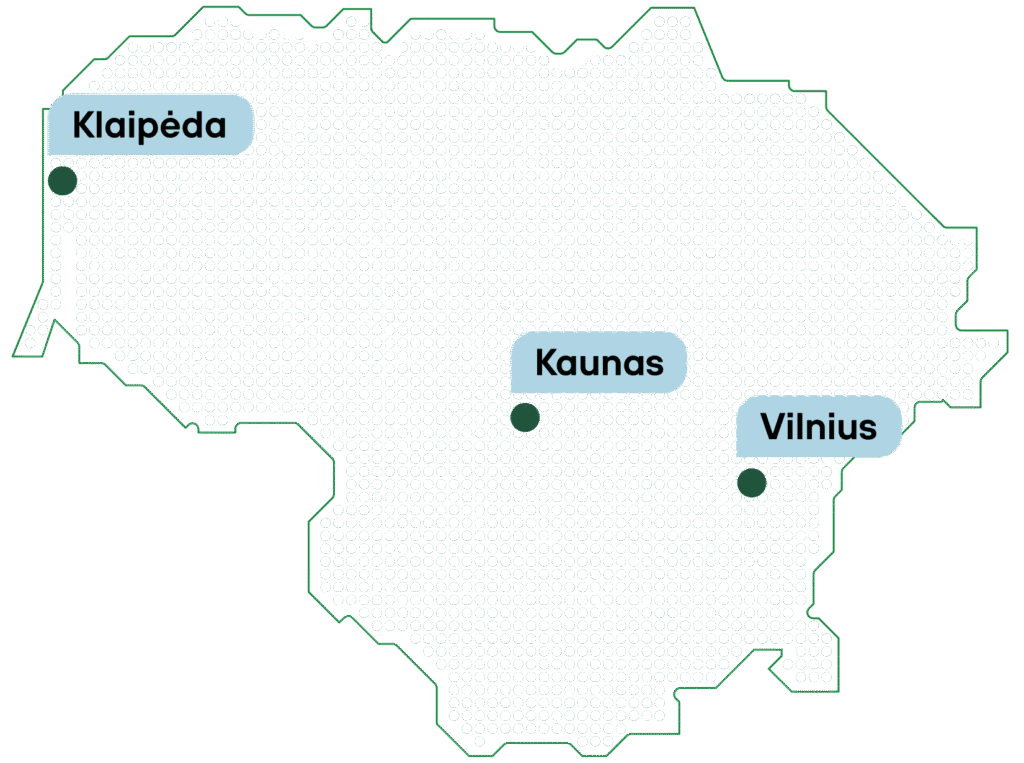
Where Lithuania's fintech ecosystem is taking shape

Vilnius
231
fintechs
Kaunas
15
fintechs
Klaipėda
2
fintechs
Lithuania map with Vilnius, Kaunas and Klaipeda
Newcomers
Fintechs that have recently established presence in Lithuania.
Robinhood logo
Checkout logo
Ebury logo
Tide logo
Growth and expansion-stage companies
Lithuania offers the talent, infrastructure, and cross-border connectivity these companies need as they grow their teams.
Tribe Payments logo
Shift4 logo
Paystrax logo
Architus logo
Established names
Global players that have made Lithuania a strategic base for serving European and international markets.
Google Pay logo
Nuvei logo
Revolut logo
Airwallex logo
Lithuanian fintechs
Born in Lithuania, these companies are building globally competitive products.

Axiology logo
ConnectPay logo
Amlyze logo
Ondato logo

The Bank of Lithuania: shaping a fintech ecosystem

Underpinning the shift towards ecosystem sustainability is the Bank of Lithuania. As the country’s supervisory authority, it plays a proactive role in supporting fintech through a range of initiatives and easy-to-use digital infrastructure.
The Newcomer Programme
The Newcomer Programme provides a one-stop consultation service for companies seeking financial licences in Lithuania, ensuring clarity and speed throughout the licensing process.
Newcommer programme
The Regulatory Sandbox enables firms to test financial innovations in a live environment under the supervision and guidance of the BoL, reducing regulatory uncertainty while accelerating market entry.
Regulatory sandbox
CENTROlink, the BoL’s 24/7/365 payment system, offers direct technical access to the Single Euro Payments Area (SEPA) for payment and electronic money institutions licensed in the European Economic Area (EEA), strengthening Lithuania’s position as a gateway to the EU market.
Centrolink
MSkuodis
Lithuania’s fintech sector has grown into a mature ecosystem. Today, success is measured not only by the number of market participants, but also by the sector’s ability to innovate quickly yet responsibly, manage risks effectively, and create lasting value for consumers and the economy. At the Bank of Lithuania, we contribute to these conditions through clear supervision, openness to innovation, and a practical, forward-looking approach.
Marius Skuodis
Board member of the Bank of Lithuania
Lietuvos bankas
Contact us dark green

Ready to scale your fintech?

Lithuania offers more than regulatory innovation. It offers a proven environment where fintech companies grow from launch to market leadership. Access funding networks, connect with experienced founders, and tap into a talent pool built for scale.

Charts and insights

All downloadable, because decisions need data